Aerospace & Aircraft Hangars
High-Performance Aerospace & Hangar Floor Systems
PumaCRETE epoxy, polyaspartic, and urethane concrete floor coatings are engineered for the harshest conditions in an aircraft hangar — Skydrol spills, jet-fuel exposure, rolling aircraft loads, de-icing fluids, and the constant UV through hangar doors — without yellowing, chalking, or failing.
Installed in commercial MRO and FBO hangars, military bases, helipads, avionics labs, and aerospace assembly facilities. Light-reflective, slip-resistant, UV-stable, and aligned with DOD coating specifications including MIL-PRF-85285 topcoat criteria. ESD/conductive options available for avionics and weapons-handling areas.
45–60 mils
Standard System Build
Up to 1/4 in.
Heavy-Duty Resurfacer
UV Stable
Aliphatic Topcoat
24–48 hr
Return to Aircraft Loading
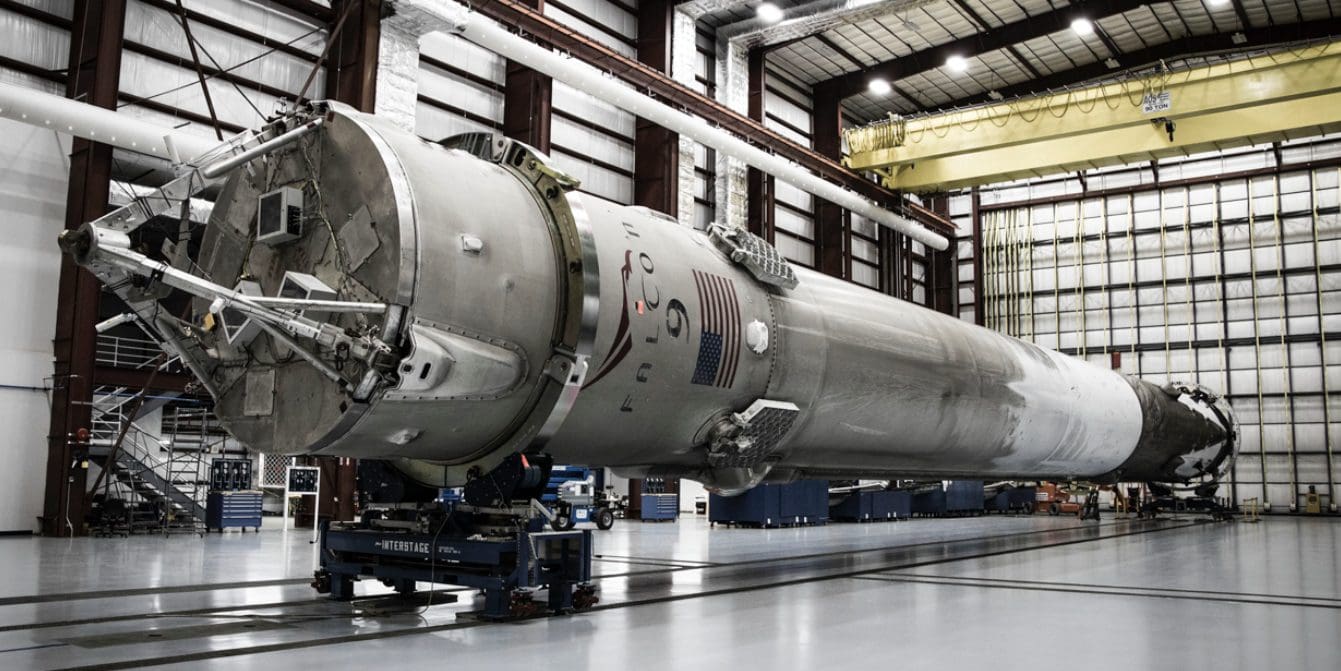
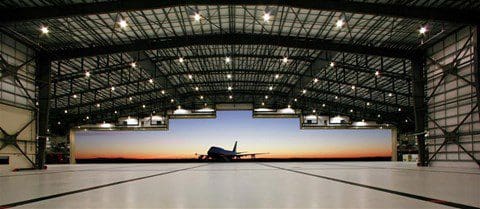
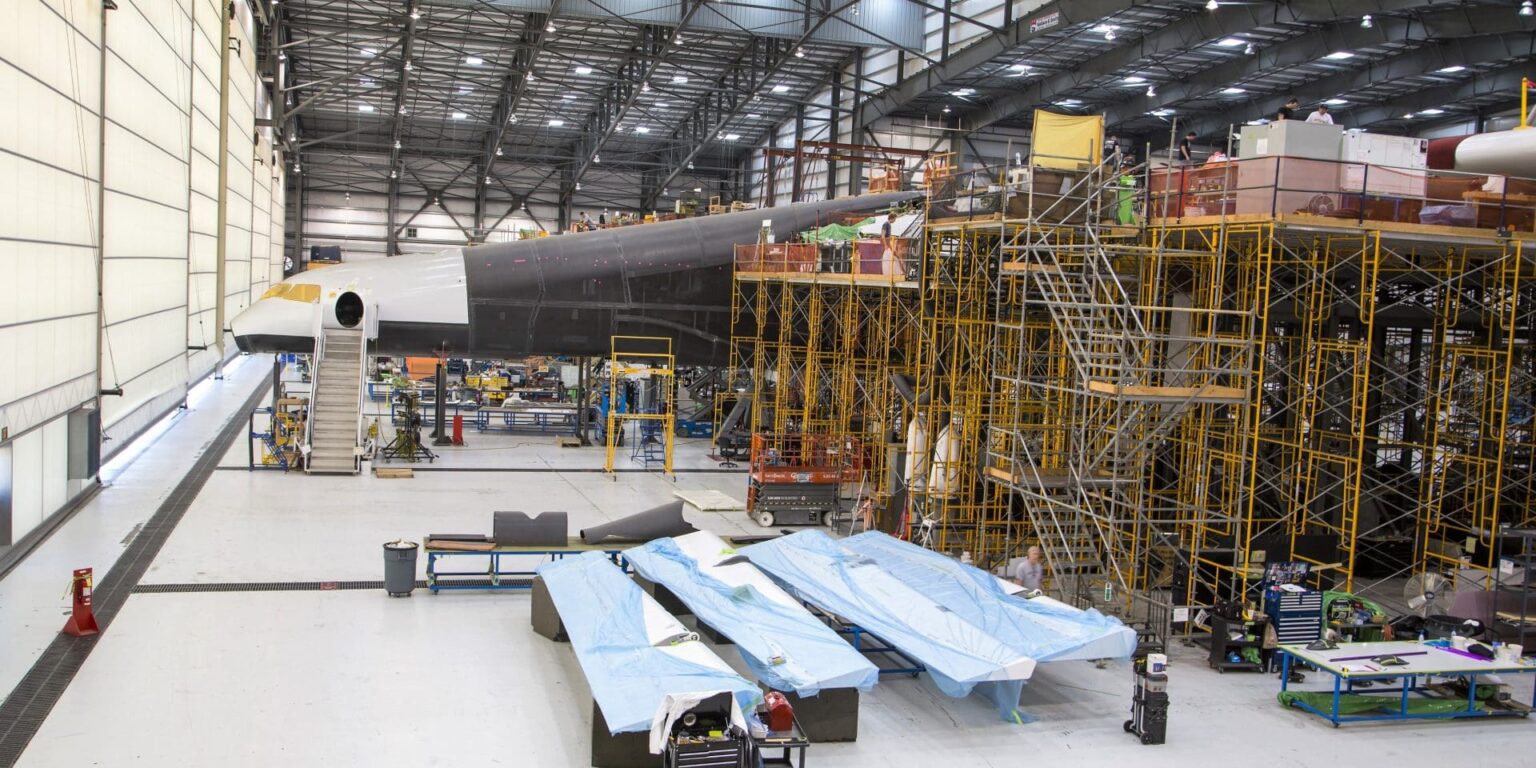
The Engineering Challenge
Why Most Hangar Floors Fail — And How PumaCRETE Solves It
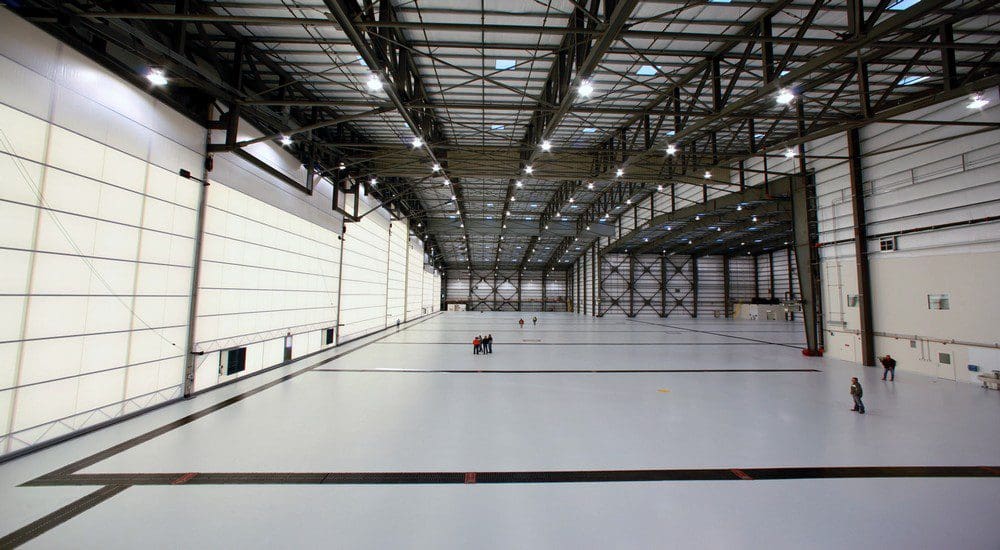
An aircraft hangar punishes floor coatings in ways most industrial environments don’t. Cheap epoxy systems blister, yellow, and crack within a year or two. PumaCRETE’s multi-resin approach was built specifically for the aviation chemistry profile.
Skydrol Resistant
PumaCRETE topcoats withstand Skydrol phosphate-ester hydraulic fluid — the chemical that destroys nearly every conventional coating. No softening, blistering, or substrate contamination from spills.
Jet Fuel & Hydraulic Oils
Resistant to Jet A, JP-4, JP-5, JP-8, AvGas, hydraulic fluids, lubricants, and turbine oils. Seamless surface prevents penetration into concrete — protecting the slab and meeting EPA spill-containment expectations.
UV Stable & Non-Yellowing
Aliphatic polyurethane and polyaspartic topcoats stay white and bright under sustained sun exposure through open hangar doors and skylights. Standard epoxy-only systems yellow within months.
Rolling Aircraft Loads
Withstands the point loads of aircraft tires, jacks, and tow tractors. High-build systems at 45–60 mils — or thicker urethane concrete at 1/4 inch — distribute load and resist impact from dropped tooling.
De-Icing & Cleaning Chemicals
Resists glycol-based de-icing fluids, aircraft cleaners, solvents, and the alkaline wash-down chemistry typical of MRO operations. Surface stays sealed against repeated exposure cycles.
Light-Reflective Finish
High-gloss white or light-grey topcoats amplify hangar lighting by 200–300%, improving visibility under aircraft and reducing ground-support lighting costs. Critical for inspections, MRO, and night operations.
Aerospace Zones We Floor
Every Area of an Aerospace Facility
A modern aerospace facility is not one floor — it’s a dozen different floors with a dozen different requirements. PumaCRETE specifies a finish, thickness, and chemistry profile matched to each zone.
Aircraft Hangar Bays
Heavy aircraft point loads, Skydrol and jet-fuel exposure, hangar-door UV. The core 45–60 mil high-build epoxy with aliphatic urethane topcoat is the workhorse here.
MRO & Maintenance Bays
Hydraulic fluid, lubricant, and solvent exposure plus dropped-tool impact. Thicker resurfacer systems and aggregate-broadcast textured finishes resist the worst of MRO punishment.
FBO & Corporate Hangars
High-aesthetic finishes for executive and corporate hangars. Reflective gloss white or branded color schemes with safety striping and zone markings included.
Military Hangars & Bases
DOD-spec aligned coatings, MIL-PRF chemistry, federal acquisition documentation. Coordinated with base civil engineers and ACE-managed projects.
Helipads & Helicopter Hangars
Heavy point loads under helicopter skids and rotor wash exposure. Urethane concrete at 1/4 inch handles the impact and thermal cycling near turbines.
Avionics & Electronics Labs
ANSI/ESD S20.20-compliant static-dissipative systems for avionics manufacturing, repair, and test. Resistance tunable from 10⁶ to 10⁹ ohms.
Assembly & Composite Layup
Aerospace assembly lines, composite manufacturing, and clean rooms. Low-VOC, light-reflective, dust-free finishes that meet cleanroom protocols.
Paint & Strip Hangars
Solvent-resistant systems for stripping bays and paint hangars. Chemical-containment grade where required — coordinated with EPA and OSHA documentation.
Fuel Storage & Tank Areas
Chemical-containment systems for fuel storage, tank farms, and fueling stations. Integral coving and slope-to-drain for spill control.
Hangar System Options
Choosing the Right Aerospace Floor System
Hangar conditions vary widely — a corporate FBO bay needs a very different floor from a military maintenance hangar or a composite layup room. PumaCRETE offers five distinct system families, specified to match.
| System | Build Thickness | Best For | Topcoat & Finish |
|---|---|---|---|
| PumaCRETE 100 / 200 — High-Build Epoxy | 45–60 mils (0.045–0.060 in.) | Standard hangar bays, FBO, corporate, commercial MRO | Aliphatic polyurethane or polyaspartic; gloss or satin, UV stable |
| PumaCRETE 300 — Mortar Resurfacer | 1/16 to 1/4 inch | Deteriorated concrete, heavy impact zones, moisture-affected slabs | Troweled or self-leveling, aggregate broadcast, gloss topcoat |
| PumaCRETE 401-HF — Urethane Concrete | 1/4 inch (3/8 in. for thermal) | Helipads, severe-service maintenance bays, hot-tire zones, paint/strip hangars | One-pass troweled, slip-textured, optional pigmented seal |
| Puma-ESD — Static-Control | 12 mils to 1/4 inch | Avionics labs, electronics assembly, weapons-handling areas | Smooth conductive or static-dissipative; ANSI/ESD S20.20 compliant |
| Polyaspartic Fast-Track Topcoat | 10–20 mils overlay | Short-shutdown rebuilds where return-to-service speed dominates | Gloss, low-odor, return-to-service in hours not days |
Reference: Full System Comparison | Color Charts | MasterFormat Specifications.
Thin Film Conductive Coatings
ESD Epoxy Flooring System Types
Best for light-duty to medium duty environments and controlled spaces.
FEATURES
- Meet ESD S20.20, DoD4145.26m, NFPA99 requirements.
- Smooth finish (or light texture)
- High abrasion resistance for heavy foot traffic, carts and wheeled loads.
- Easy to clean
- Chemical resistant
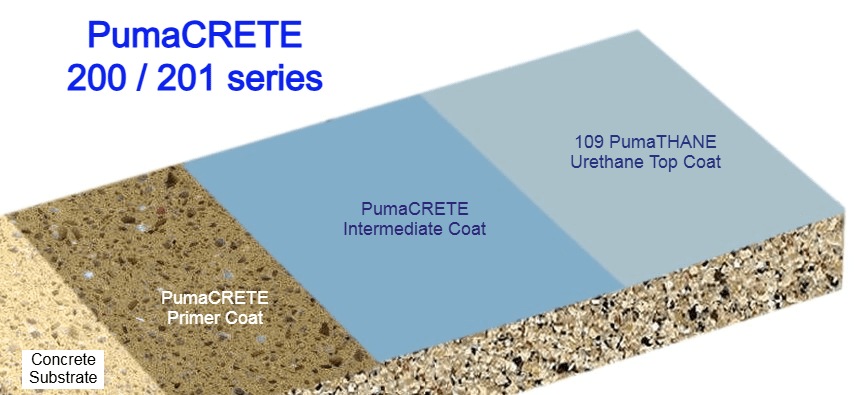
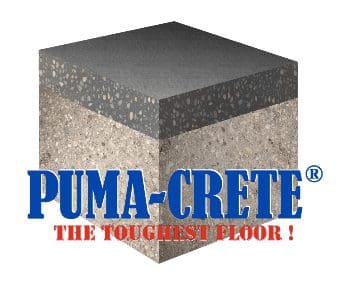
Heavy-Duty Conductive Mortar Systems 1/16 to 1/4 inch
Used in the most demanding environments.
FEATURES
- Restores damaged concrete
- Impact resistance
- High compressive strength
- Extended lifecycle performance
- Meets ESD S20.20, DoD4145.26m, NFPA99 requirements.
- Chemical resistant
Best for medium to heavy duty environments.
- Smooth finish (or light texture)
- High abrasion resistance for heavy traffic including forklifts, rubber and plastic wheels.
- Easy to clean
DOD & Federal Procurement
Military & Federal Specification Alignment
PumaCRETE hangar systems are specified to align with the DOD coating chemistry framework and federal procurement standards. We deliver full submittal packages, SDS documentation, and CSI MasterFormat specifications for ACE and base civil-engineer projects.
Military Performance Specifications
- Topcoat fluid-resistance criteria aligned with MIL-PRF-85285 (Topcoat, Aircraft and Support Equipment)
- Epoxy primer characteristics aligned with MIL-PRF-23377 and MIL-PRF-85582
- Coating compatibility matrix per MIL-STD-7179
- Skydrol resistance per Eastman Skydrol 500B-4 performance criteria
Federal Procurement & Documentation
- CSI MasterFormat Division 07 92 00 and 09 67 23 specifications
- Full submittal package including TDS, SDS, and product data sheets
- Buy American Act-compliant supply chain documentation
- Bonding and federal-acquisition support available
Safety & Workplace Standards
- OSHA 1910.22 — slip-resistance for walking-working surfaces
- NFPA fire-retardant formulations available for fuel-storage areas
- Low-VOC chemistry safe for installation in occupied hangars
- FAA ground-safety guidance for fueling and maintenance ramps
Environmental & LEED
- EPA SPCC-compatible spill-containment configurations
- Contributes to LEED MR and IEQ credits
- 20+ year service life reduces lifecycle environmental impact
- Low-VOC during installation and in service
How We Work
The PumaCRETE Hangar Installation Process
A predictable five-stage process designed around active hangar operations. Phased bays, dust-contained surface prep, and overnight cure windows mean aircraft keep moving while the floor gets rebuilt.
1
Site Assessment
Substrate moisture testing, crack and joint survey, chemical exposure audit, traffic mapping. We specify the right system for your actual operating conditions.
2
Surface Preparation
Diamond grinding or shot blasting to CSP 4–5 profile. Crack and spall repair. HEPA-vacuumed — no airborne dust migrating to adjacent bays or sensitive avionics areas.
3
Primer & Base Coat
Penetrating epoxy primer, then high-build base coat at 30–45 mils. Slope corrections and integral coving placed during this stage where required.
4
Aggregate & Topcoat
Optional aggregate broadcast for slip resistance, followed by aliphatic urethane or polyaspartic topcoat. Hangar markings and striping integrated into this layer.
5
Cure & Return-to-Service
Foot traffic in 6–12 hours, light wheeled traffic at 24 hours, full aircraft loading within 24–48 hours of final coat (at 70°F). Polyaspartic option compresses this further.
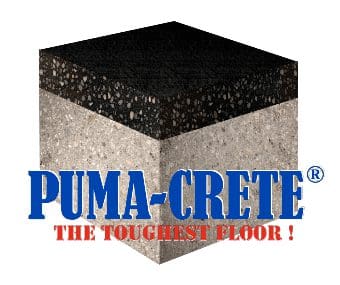
NATIONWIDE NETWORK OF INSTALLATION
With a nationwide network of installers, PumaCRETE® has provides a tradition of quality. Our factory-trained installation crews can provide turn-key installation and localized service. In many cases, we can train your personnel or local contractor, with on site training available.
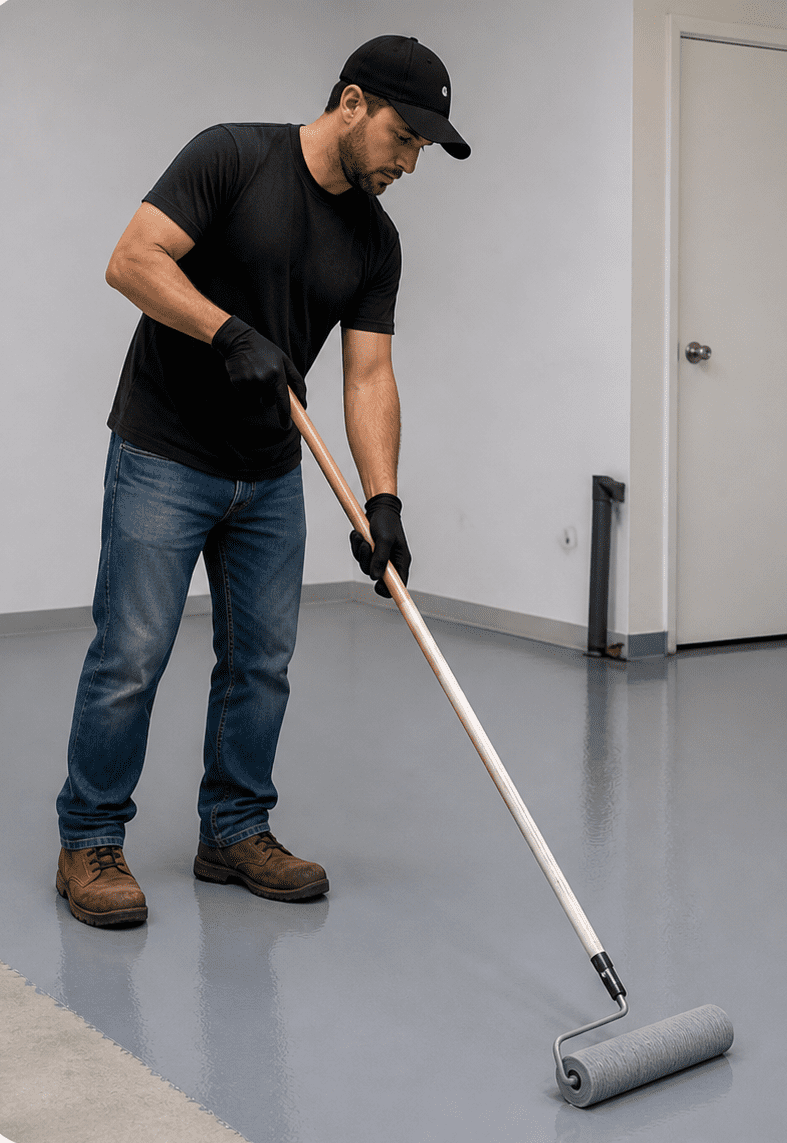
PumaCRETE® SITE TRAINERS
PumaCRETE® can provide on site trainers, along with detailed installation instructions and videos, specialty tools, and surface prep guidelines for new installers or DIY installation. See our installation page for our application resources.
Performance & Track Record
Technical Specifications & Why Aerospace Facilities Choose PumaCRETE
Independently tested performance data for the standard PumaCRETE 200-series high-build hangar system, plus the operational reasons aerospace and military facilities standardize on PumaCRETE.
| Compressive Strength | 11,000 psi (ASTM C579) | Tensile Strength | 4,500 psi (ASTM D638) |
| Flexural Strength | 6,800 psi (ASTM D790) | Bond Strength to Concrete | > substrate (ASTM D7234) |
| Abrasion Resistance | 0.04 g loss (ASTM D4060, CS-17) | Impact Resistance | >160 in-lb (ASTM D2794) |
| Service Temperature | -40°F to 180°F | UV Stability | Aliphatic — no yellowing |
| Skydrol Resistance | Pass — 168 hr immersion | Jet Fuel / JP-8 Resistance | Pass — 72 hr immersion |
| Coefficient of Friction (wet) | 0.6–0.9 (tunable) | System Build | 45–60 mils standard |
Aerospace Client Heritage
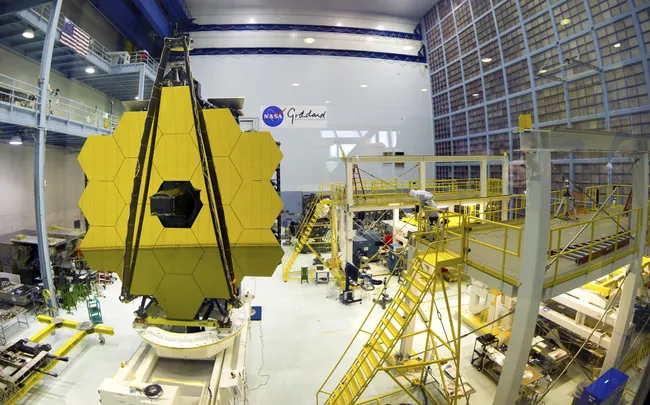
Trusted by aerospace and federal clients including NASA, U.S. military bases, and major commercial MRO operators. Decades of hangar installations across the U.S.
Multi-Resin Specification
Not just an epoxy company. We specify epoxy, polyaspartic, aliphatic urethane, and urethane concrete chemistries — and use whichever is right for your hangar zone.
Factory-Certified Crews
A nationwide network of certified applicators trained on PumaCRETE chemistry. No subcontracting to general flooring teams who learn on your hangar floor.
Phased & Night Scheduling
Bay-by-bay phased installation, night shifts, weekend windows, and aircraft-relocation coordination. Your flight schedule drives ours.
Federal Documentation
Full submittal packages, SDS, MIL-PRF cross-references, CSI MasterFormat specs, and Buy American Act documentation for federal acquisition projects.
20+ Year Service Life
Proven longevity under aircraft loads, Skydrol exposure, and UV cycling. Independent ASTM testing and three decades of field performance back the warranty.
Lifecycle Economics
The Real Cost of an Aerospace Hangar Floor
Hangar floors that fail force shutdowns, equipment relocation, and lost MRO revenue — costs that dwarf the install price. PumaCRETE’s higher up-front investment pays back through 20-year service life and zero unplanned downtime.
| Cost Factor | Bare / Sealed Concrete | Basic Epoxy Coating | PumaCRETE High-Build System |
|---|---|---|---|
| Typical Service Life | 2–5 yrs in MRO conditions | 3–7 yrs (less with Skydrol exposure) | 20+ yrs |
| Installed Cost (per sq ft) | $2–$5 | $5–$10 | $10–$18 |
| Skydrol Resistance | None — substrate damage | Softens, blisters | Pass — 168 hr immersion |
| UV / Yellowing | N/A | Yellows in 6–12 months | Aliphatic — no yellowing |
| Aircraft Tire Load Tolerance | Cracks, spalls under jacks | Surface damage, chip-out | Designed for it |
| Light Reflectivity | Dark, dust-absorbing | Initially bright, fades | 200–300% lighting amplification, sustained |
What You Get with a PumaCRETE Aerospace Floor
- Skydrol, jet fuel, and de-icing fluid resistance — documented in independent immersion testing.
- 20+ year service life under aircraft loads, UV cycling, and aviation chemistry.
- UV-stable aliphatic topcoats — no yellowing, chalking, or gloss loss under sustained sun exposure.
- 200–300% light amplification from reflective gloss white finishes — improving inspection visibility and reducing lighting costs.
- Phased installation — bay-by-bay scheduling keeps adjacent operations running.
- ESD / static-dissipative options for avionics labs and weapons-handling areas — ANSI/ESD S20.20 compliant.
- Integrated hangar markings — safety striping, aircraft positioning, FOD zones, and custom logos in the seal coat, not painted over.
- DOD-spec alignment — MIL-PRF-85285 topcoat criteria, MIL-PRF-23377 primer chemistry, CSI MasterFormat documentation.
- Federal-acquisition documentation — full submittals, Buy American Act compliance, bonding support.
- Nationwide factory-certified applicators — backed by 30+ years of PumaCRETE field installations.
Frequently Asked Questions
Aircraft Hangar Floor Coatings FAQ
Yes. PumaCRETE high-performance hangar floor coatings are formulated to resist Skydrol phosphate-ester hydraulic fluid, Jet A, JP-4, JP-5, JP-8, lubricants, de-icing fluids, and the full range of aviation chemicals. The seamless surface prevents penetration into the substrate, eliminating staining and ground contamination from spills.
For typical hangar floors, PumaCRETE specifies a 45 to 60-mil high-build epoxy system with polyaspartic or aliphatic urethane topcoat. For heavy maintenance bays with concrete moisture or impact concerns, we use thicker resurfacer systems from 1/16 inch up to 1/4 inch. Helipads and severe-wear zones may use the 401-HF urethane concrete at 1/4 inch.
No. PumaCRETE finishes use aliphatic polyurethane or polyaspartic topcoats, which are UV stable and do not yellow, chalk, or dull when exposed to sunlight through hangar doors or skylights. Lower-grade epoxy-only systems yellow within months — PumaCRETE topcoats keep their original color and gloss for the life of the floor.
Yes. Most hangar floor installs are phased — one bay or work zone at a time — so adjacent operations continue uninterupted. Foot traffic typically returns in 6–12 hours and full aircraft loading within 24–48 hours of the final coat. Polyaspartic topcoat options compress that further for short-shutdown windows.
Yes. PumaCRETE Puma-ESD systems provide ANSI/ESD S20.20-compliant static-dissipative and conductive floors for avionics labs, electronics assembly, weapons-handling areas, and other static-sensitive aerospace zones. Resistance can be tuned from 10⁶ to 10⁹ ohms.
PumaCRETE hangar systems are specified to align with DOD coating performance requirements including MIL-PRF-85285 topcoat fluid-resistance criteria and MIL-PRF-23377 epoxy primer characteristics. Specifications are written per CSI MasterFormat Divisions 07 and 09, and we deliver full submittals and SDS documentation for federal procurement.
EXPERIENCE AND EXPERTISE
Ready to Specify Your Aerospace Floor?
Get a no-obligation site assessment and system specification from PumaCRETE — 30+ years of hangar installations, multi-resin specification expertise, and federal-procurement documentation. We’ll review your bays, chemistry exposure, aircraft loading, and operating schedule — and deliver a written spec and budget within five business days.
Get a no-obligation site assessment and system specification from PumaCRETE — 30+ years of experience and a nationwide network of factory-certified applicators. We’ll review your loads, chemicals, temperature profile, and production schedule — and deliver a written spec and budget within five business days.
