

Meat & Poultry · Live Receiving
Floors for Live Receiving, Live Hang & Crate Wash
The dirtiest area in the plant is where the birds come in. Manure, feathers and wash water hit the floor all shift, coops and modules are unloaded by forklift, and crate washers blast hot water and chemicals across every surface. Bare concrete erodes into rough, porous pits that never come clean. PumaCRETE urethane concrete flooring seals the slab, takes the traffic and pressure washing, and keeps a non-slip texture under wet, dirty conditions.
9,500 psi
Compressive strength
0.6–0.9
Wet coefficient of friction
3/8 in
Heavy washdown zones
5-yr
Written warranty
GET A FREE QUOTE

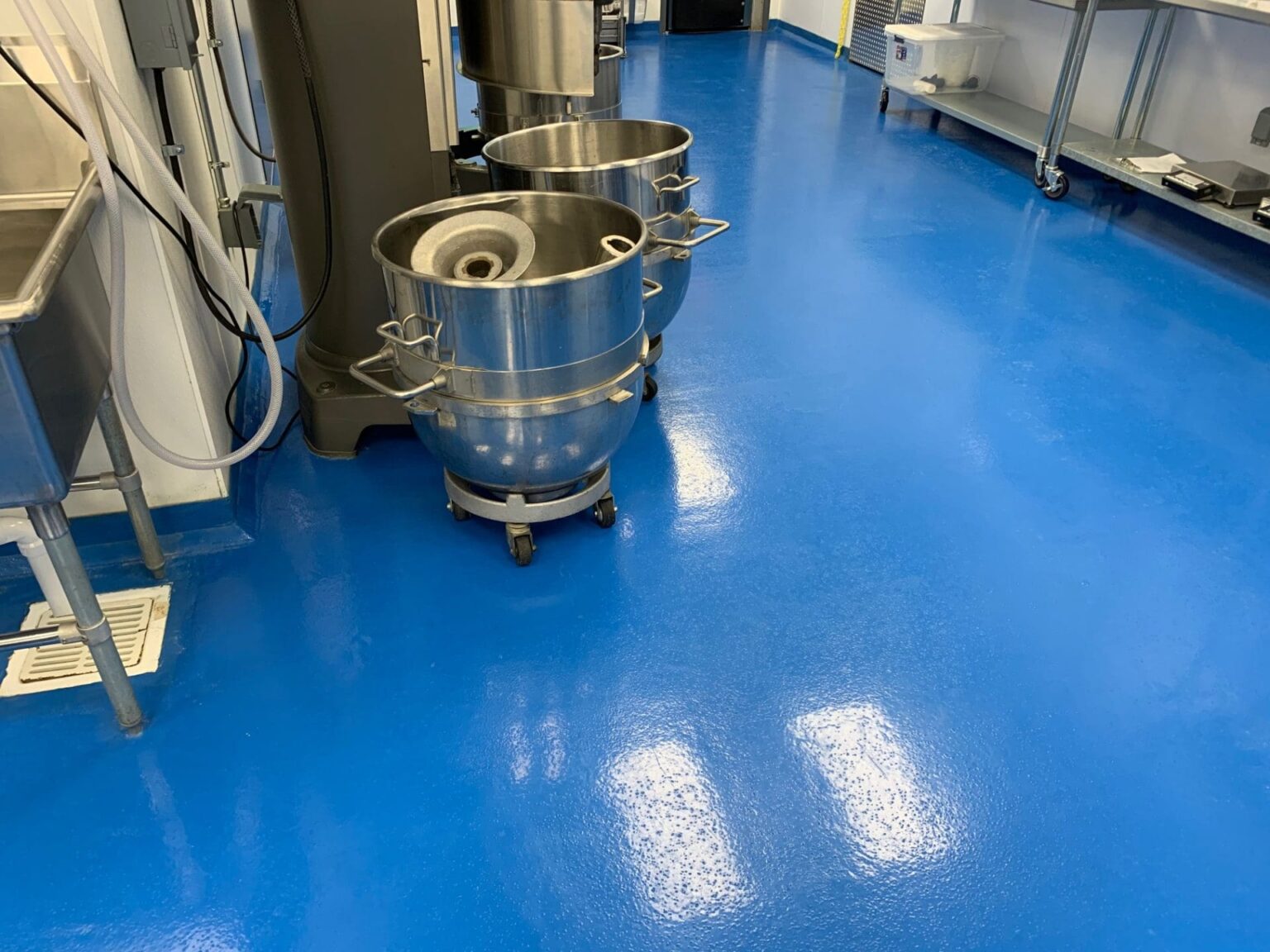
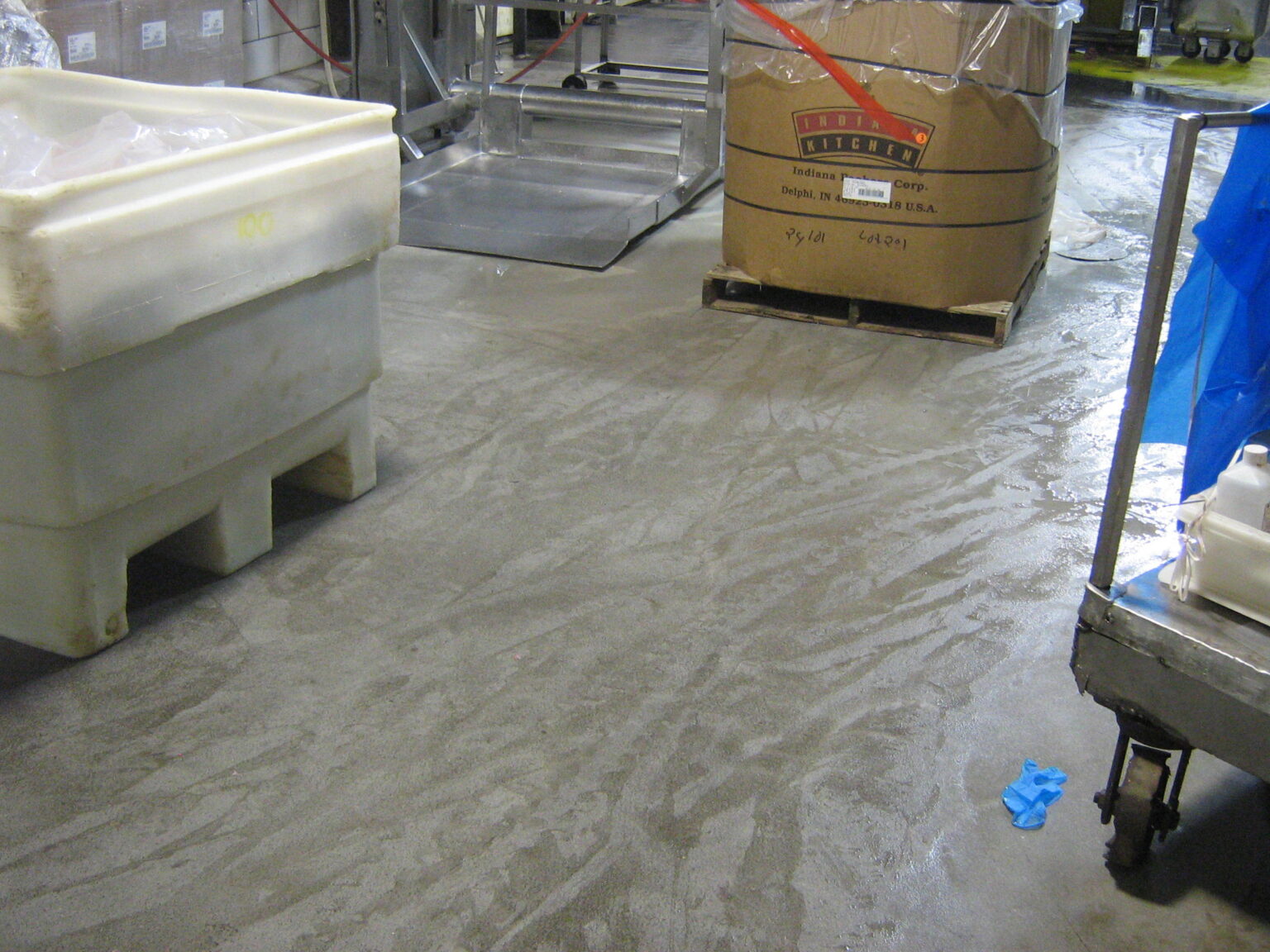

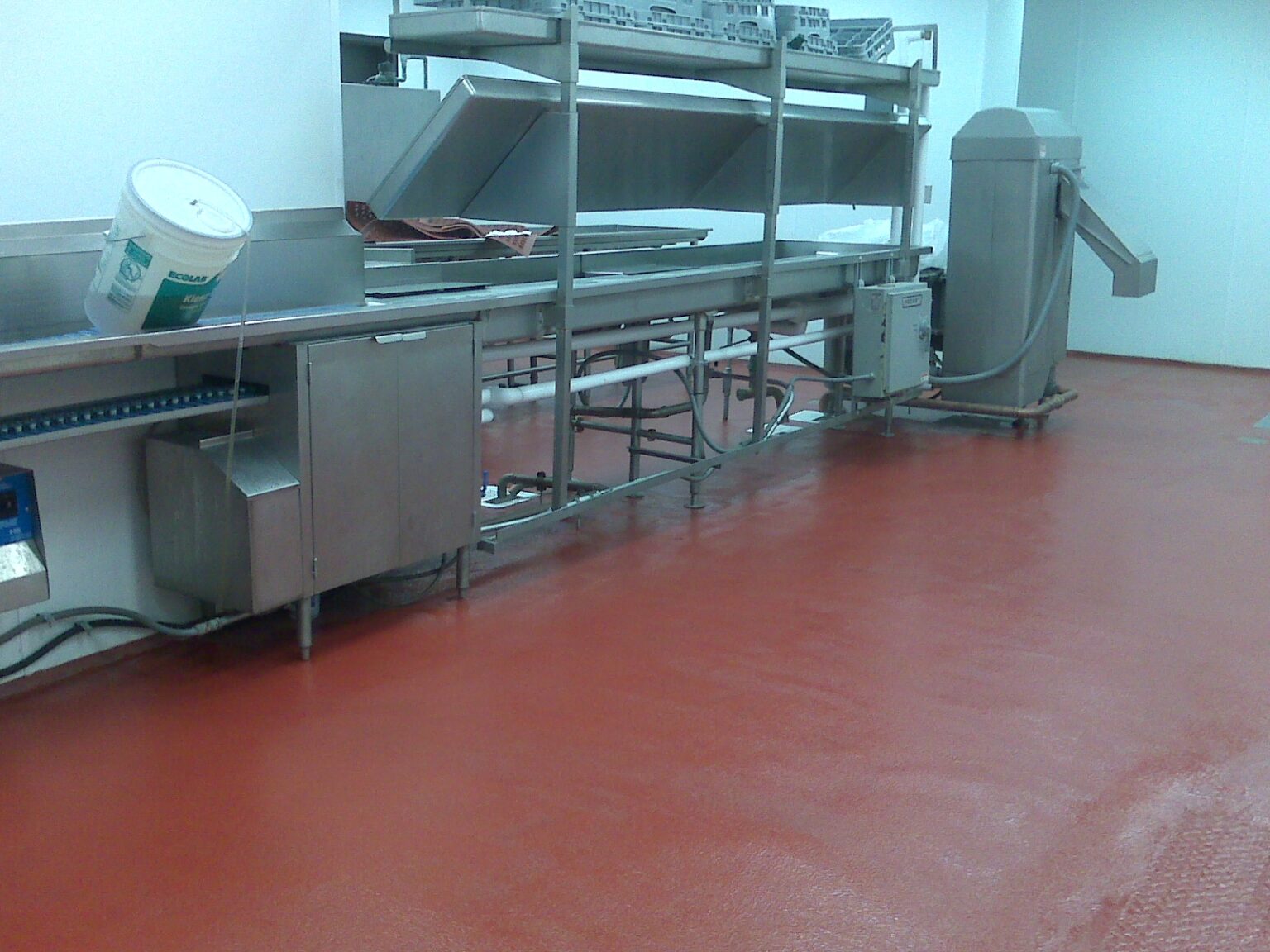
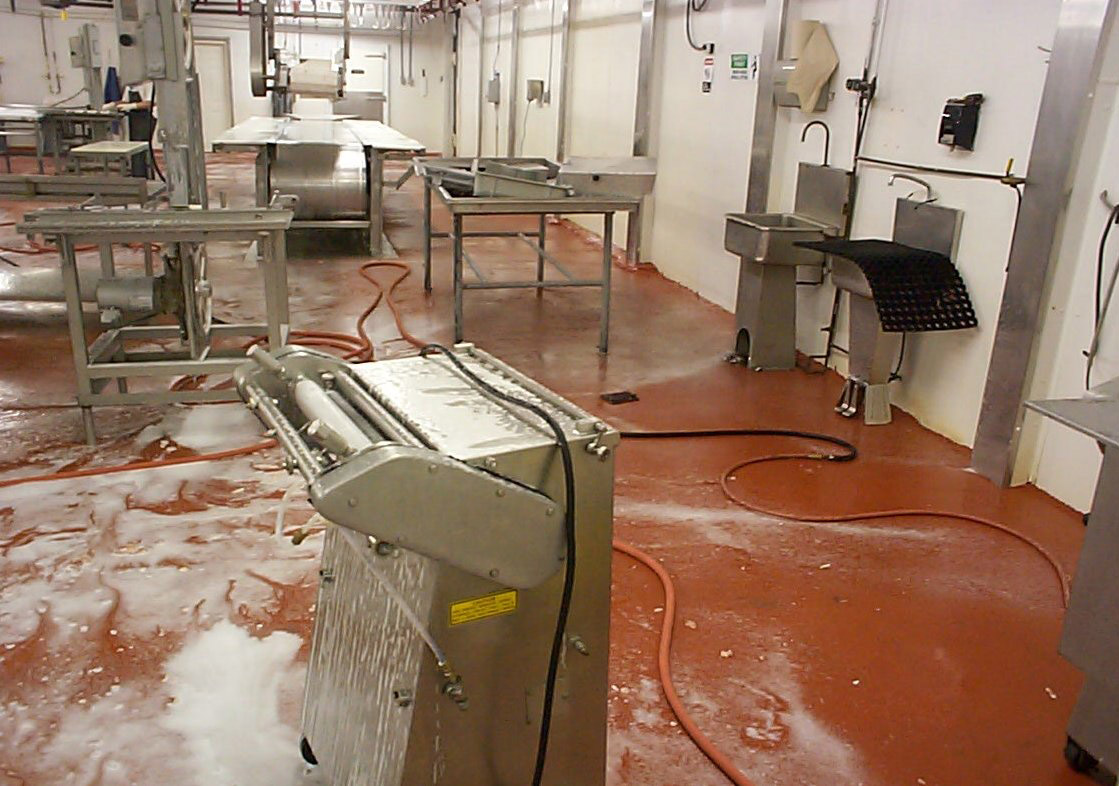
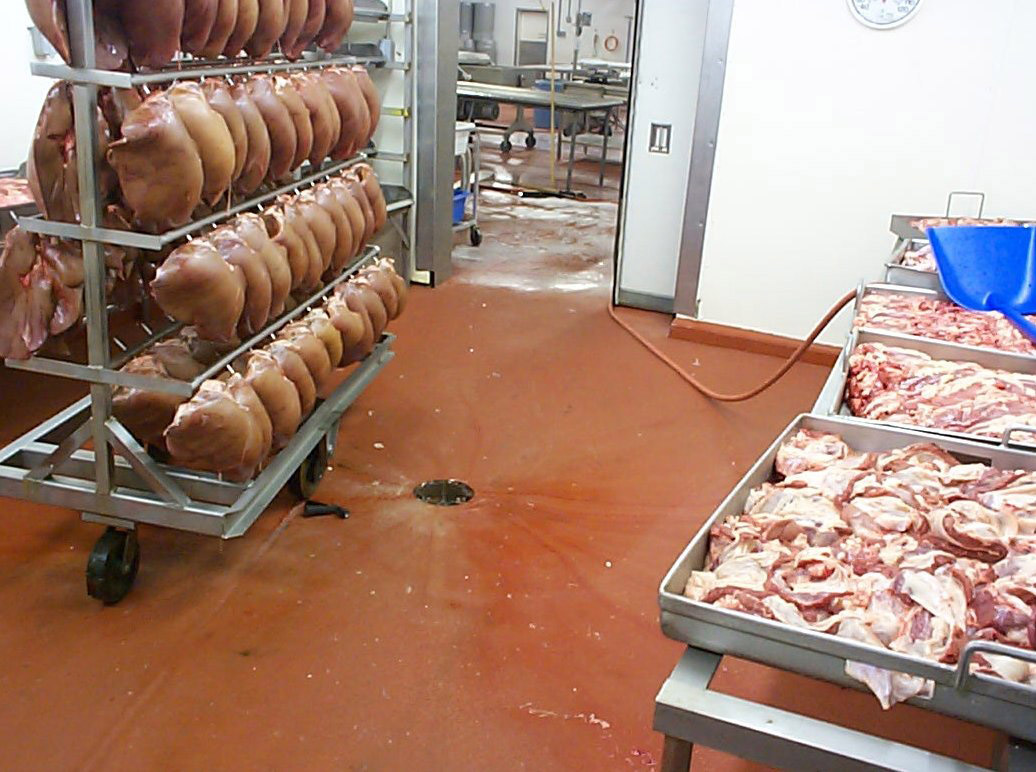

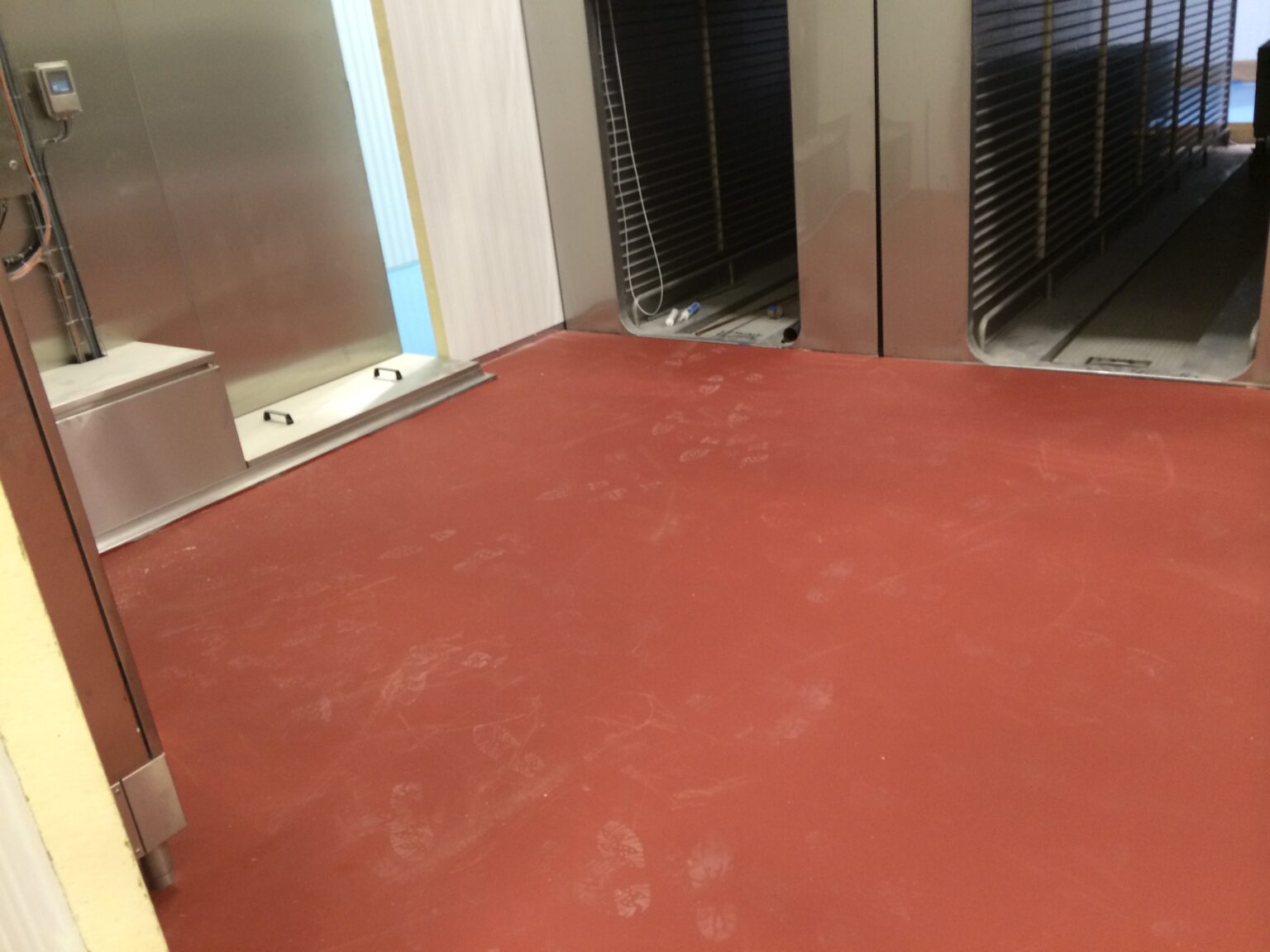
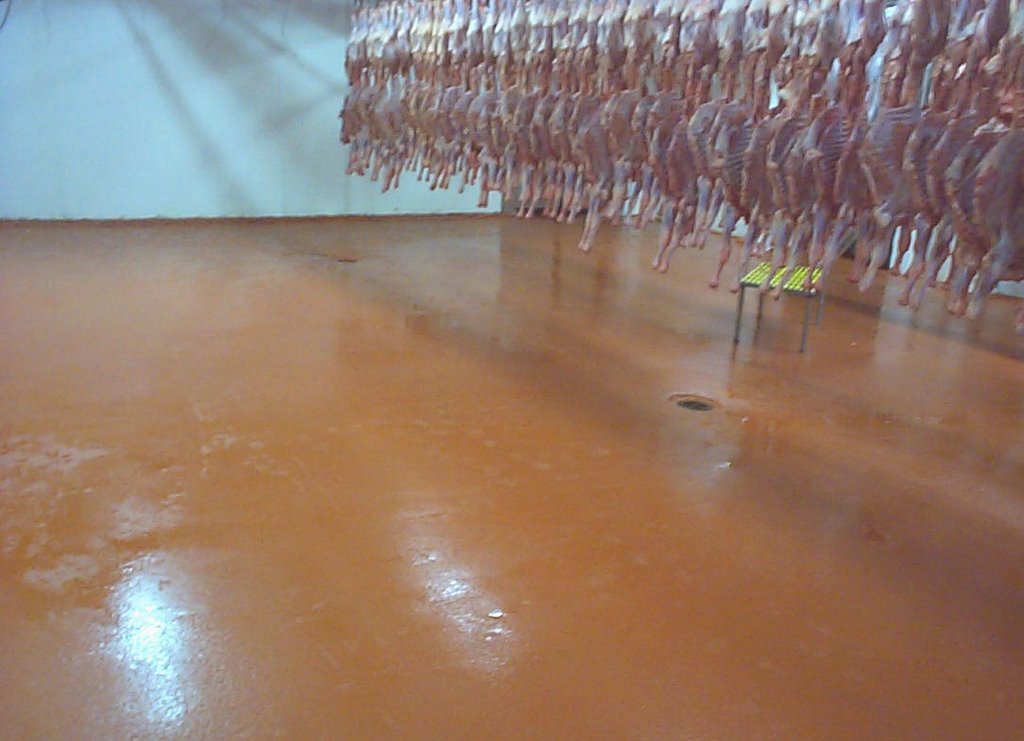
What live receiving does to a floor
Each area of a meat or poultry plant gets its own thickness, texture and detailing. Choose your area for zone-by-zone recommendations.
Manure, feathers and organic acids
Droppings and wet litter are acidic and abrasive. They etch bare concrete and break down thin coatings. Urethane concrete resists organic acids and cleans back to a sealed surface.
Pressure and hot-water washing
Crate, cage and module washers and hand lances hit the floor with hot water and pressure every cycle. PumaCRETE is troweled thick enough to take it without eroding or delaminating.
Forklift and module traffic
Loaded modules and coops are unloaded and moved by forklift. The 9,500 psi system resists wheel wear, impact and dropped equipment.
Slips at the hang line
Live hang is wet, dusty and covered in feathers. Aggregate broadcast gives a wet coefficient of friction in the 0.6–0.9 range, and the texture holds as the floor wears.
Detergents and sanitizers
Alkaline detergents, chlorine and other sanitizers used on crates and modules drain across the floor. PumaCRETE is rated for the full range of plant cleaning chemistry.
Eroded, unsloped slabs
Years of washing leave low spots where dirty water pools. Re-sloping to drain is part of the same project, before the topping goes down.
Recommended system by zone
One urethane concrete system, configured for the room you’re standing in. Thickness, texture and cove are set zone by zone. Add 1/8 in for integral cove.
| Zone | Recommended system | Key exposures |
|---|---|---|
| Module and coop receiving dock | 401-HF, 3/8 in, slip-grade | Forklift traffic, manure, outdoor debris, temperature swings |
| Live hang | 401-HF, 1/4 in, coarse slip-grade | Wet feathers and dust, foot traffic, slip risk |
| Crate, cage and module wash | 401-HF, 3/8 in + cove | Hot water, high pressure, detergents, constant wet |
| Module staging and holding | 401-HF, 1/4 in | Module storage, forklift turns, washdown |
| Drain trenches and sumps | 401-HF, 3/8 in + cove | Constant flow, debris, acid and chemical contact |
How we rebuild a live receiving floor
Each area of a meat or poultry plant gets its own thickness, texture and detailing. Choose your area for zone-by-zone recommendations.
Back to sound concrete first
Pitted, eroded slabs are ground back to sound material, patched and re-sloped so wash water runs to drain.
Phased so birds keep moving
Receiving and wash zones are done in sections over down days. Each zone returns to forklift service about 24 hours after the final coat.
Texture tuned by zone
Coarser broadcast at the hang line and in wash areas, finer texture where carts roll, so the floor stays easy to clean.
Sanitation and safety
- Meets 9 CFR Part 416 sanitation performance standards for floors that are cleanable and kept in good repair
- A sealed live-side floor supports your plant’s zoning and traffic-flow controls
- OSHA-compliant slip resistance for wet hang and wash areas
- Close-out documentation for your audit file: moisture readings, thickness verification and slip-resistance testing
Performance data
| Property | PumaCRETE 401-HF |
|---|---|
| Compressive strength | 9,500 psi (ASTM C579) |
| Tensile strength | 1,450 psi (ASTM C307) |
| Flexural strength | 3,200 psi (ASTM C580) |
| Bond to concrete | Exceeds substrate (ASTM D7234) |
| Abrasion resistance | 0.06 g loss (ASTM C501) |
| Impact resistance | >160 in-lb (ASTM D2794) |
| Service temperature | -40°F to 248°F |
| Thermal shock | Pass, boiling-to-ambient cycles |
| Wet coefficient of friction | 0.6–0.9 (tunable) |
| Vapor pressure tolerance | Up to 25 lbs through the slab |
| Minimum install temperature | 35°F (operating coolers) |
| Standard thickness | 1/4 in (3/8 in in thermal zones) |
Standard 1/4-inch PumaCRETE 401-HF system. Full test data is on the technical data sheets.
Three ways to buy, direct from the manufacturer
Every system on this page is made by PumaCRETE and sold direct, with no distributor markup.
Buy the materials
Urethane concrete, primers, topcoats and cove kits shipped direct from the manufacturer to your plant. No distributor markup.
Buy it installed
Turnkey installation by factory-trained crews, with material and workmanship warranties from a single source.
Train your own crew
A factory-employed PumaCRETE trainer certifies your maintenance team or local contractor on your slab: prep, mixing, troweling, cove and testing.
Frequently Asked Questions
Live Receiving & Crate Wash FAQ's
Organic acids in manure and constant pressure washing erode the cement paste, leaving rough, porous concrete that holds bacteria and won't come clean. A sealed urethane concrete topping stops that erosion.
Yes. The standard 401-HF system tests at 9,500 psi compressive strength and resists impact above 160 in-lb, so it handles forklifts, loaded modules and dropped equipment. We specify 3/8 inch in the heaviest traffic and washdown zones.
Slip resistance is set by the aggregate broadcast. The wet coefficient of friction runs 0.6 to 0.9 depending on the texture we specify, and the texture holds as the floor wears.
Yes. Slope-to-drain corrections, new drains and trench drain edges are part of the same scope, done before the topping goes down.
EXPERIENCE AND EXPERTISE
Ready to spec yourReady to rebuild your live receiving floor?
Get a no-obligation site assessment. We review your rooms, chemistry, temperatures and production calendar, then deliver a written specification and budget within five business days.
