Boston, MA · Materials Direct · Installer-Trained
Urethane Concrete Floors for Breweries, Distilleries & Wineries
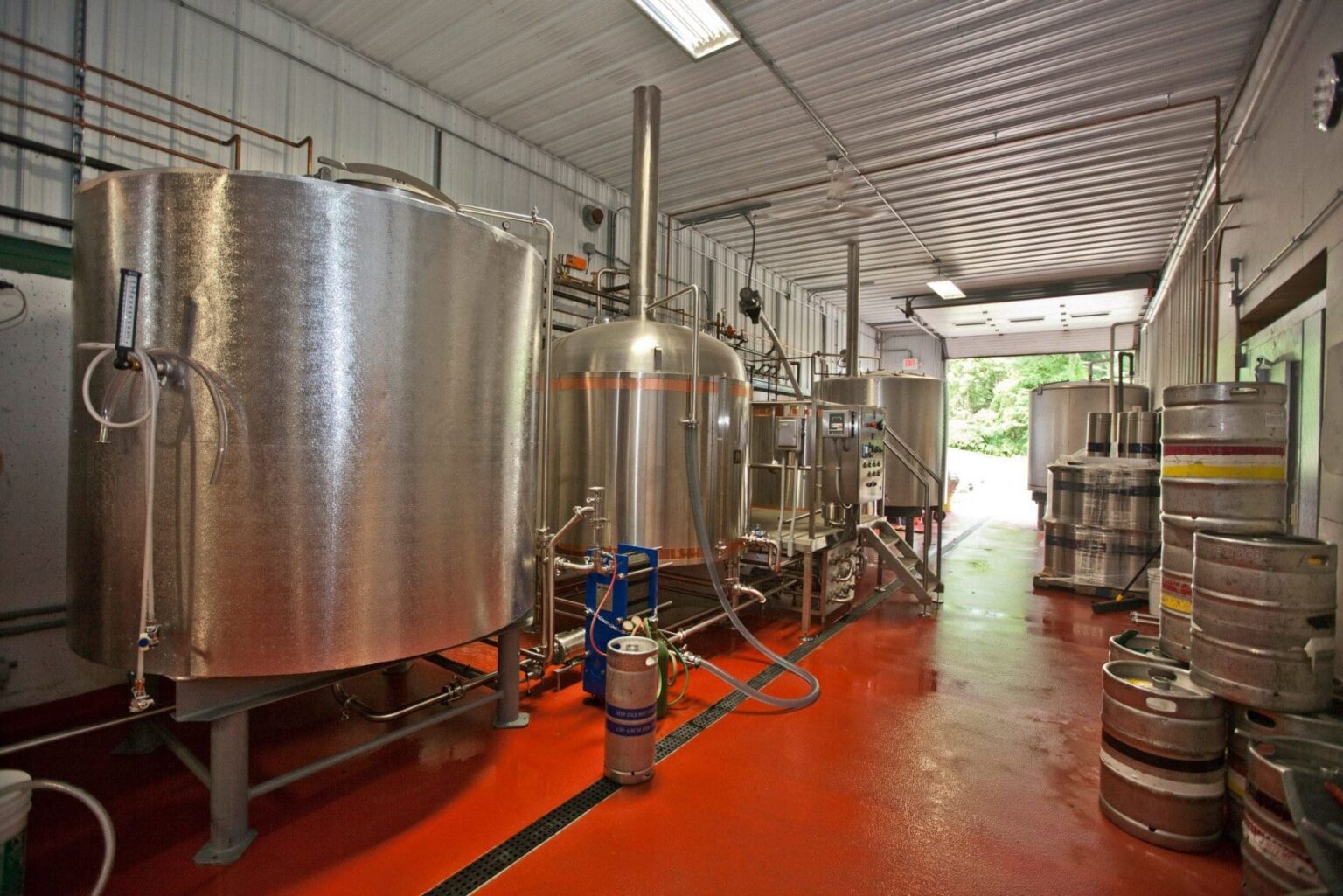
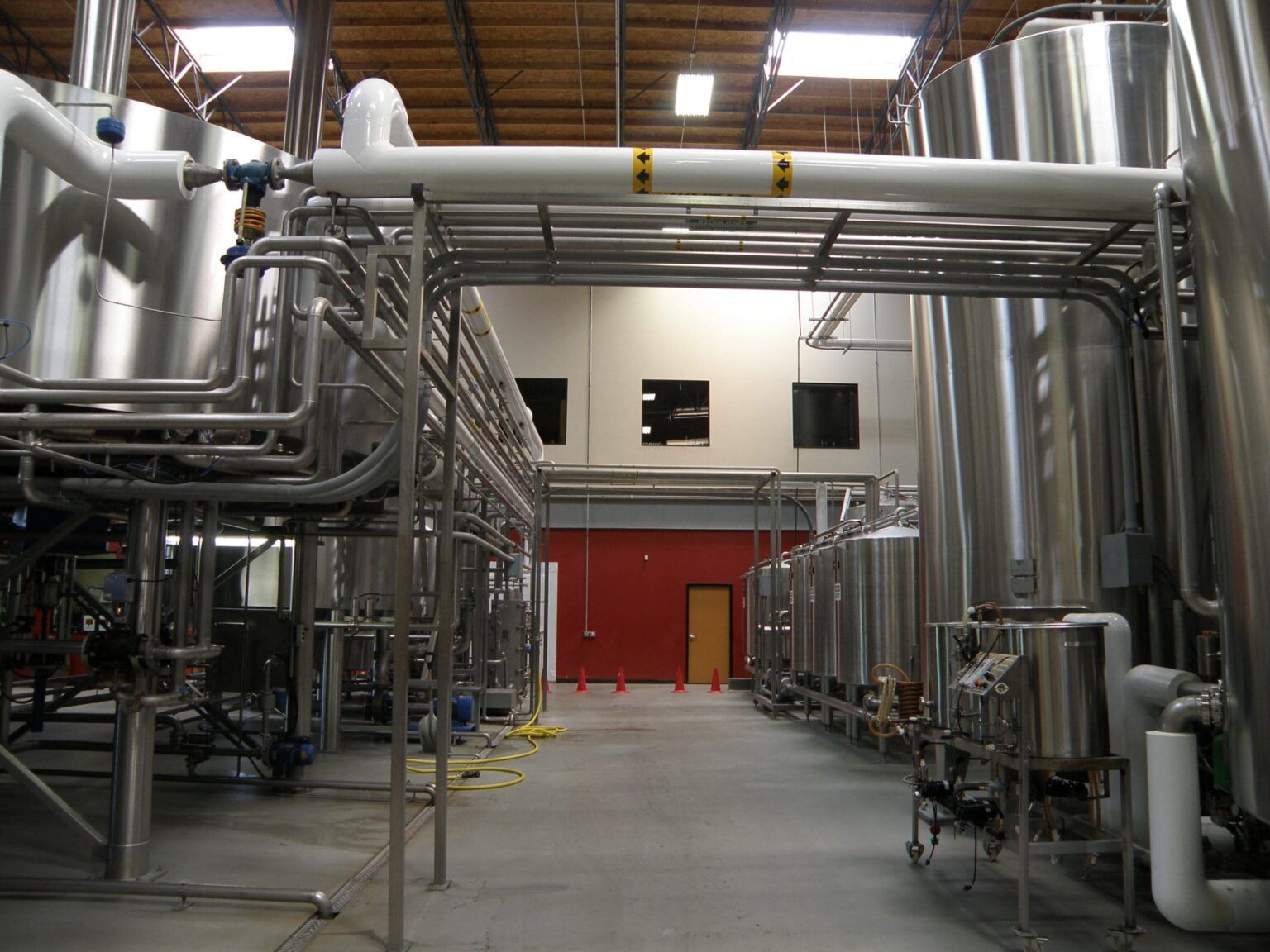
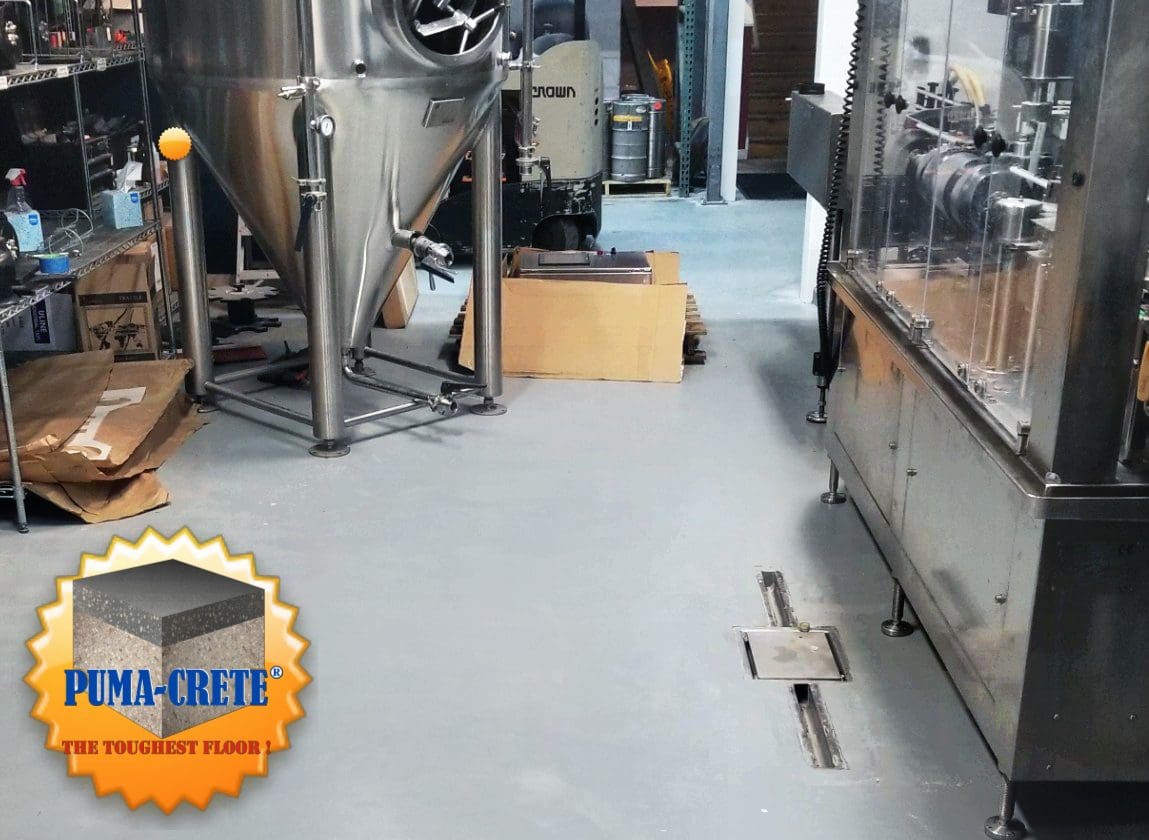
Hot-wort spills at 200°F. Ice-cold CIP rinses. Lactic acid from souring tanks, tannic acid from barrels, ethanol from the still house. PumaCRETE urethane concrete is the one floor system engineered to absorb every one of those insults in the same shift without delaminating, crazing, or going slick when wet — and it’s sold directly to your project with on-site installer certification by factory-employed trainers.
1/4–3/8 in
Nominal Thickness
200°F
Thermal Shock Tolerance
5,800 psi
Compressive Strength
5-Year
System Warranty
Three Ways to Buy — Direct from the Manufacturer
Buy materials, buy installed, or train your own crew.
PumaCRETE manufactures every system on this page and sells it three ways — direct, with no distributor markup. Whether you’re a brewery owner buying a single brewhouse floor, an A&E firm speccing a craft distillery campus, or a winery GC managing a barrel-room buildout across multiple states, the path to a sealed slab is short.
Buy the Materials
Bulk urethane concrete, primers, topcoats and integral cove kits — shipped direct from our Massachusetts facility to your plant or jobsite. No middle-man markup, no spec compromises.
Buy It Installed
Turnkey install through our certified MA installer network. Single point of accountability — material warranty and workmanship warranty come from the same source.
Train Your Own Crew
Bring your in-house maintenance team or preferred GC onto a live jobsite. Our factory-employed trainers certify them on surface prep, mixing, mil verification and resistance testing.
The vast majority of breweries, distilleries and wineries we serve choose option two — installed by a PumaCRETE-certified crew. But the option to source the same factory material direct, at the same price the installer pays, is one of the things that makes us different from the spec-sheet houses you’ll find on a typical Massachusetts brewery rebid.
Engineered Systems — By Beverage Zone
One urethane-cement chassis, configured for the zone you're standing in.
Not every square foot of a beverage facility takes the same beating. A brewhouse drain trench sees acid and 200°F wort daily; the keg-fill line sees moderate slip risk and forklift traffic; the tasting room needs decorative finish without sacrificing sanitation. PumaCRETE is specified zone by zone:
| Zone / Application | Recommended System | Thickness | Key Resistances |
|---|---|---|---|
| Brewhouse / Kettle Floor | PumaCRETE UC-300 (Urethane Concrete) | 3/8 in | 200°F thermal shock · lactic acid · steam · CIP caustic |
| Cellar & Fermentation Tank Pads | PumaCRETE UC-200 | 1/4 in | Yeast slurry · lactic / acetic acid · cold rinse cycles |
| Distillery Still House | PumaCRETE UC-300 + cove | 3/8 in | Ethanol · boil-over heat · spent grain · steam cleaning |
| Winery Crush Pad | PumaCRETE UC-300 (slip-grade) | 3/8 in | Tannic / malic acid · grape skin acid · sulfite sanitizers |
| Barrel Room / Cellar | PumaCRETE UC-200 | 1/4 in | Wine spillage · humid environment · barrel-rack loading |
| Bottling / Canning Line | PumaCRETE UC-200 + epoxy topcoat | 1/4 in | Glass abrasion · forklift wheels · sticky residue cleanup |
| Tasting Room / Public-Facing | PumaCRETE UC-200 (decorative aggregate) | 1/4 in | Foot traffic · spilled beverages · sanitary cleanup |
| Walk-In Cooler / Cold Storage | PumaCRETE UC-200 (cold-cure) | 1/4 in | −10°F installation cure · condensation · ammonia refrigerant lines |
All thicknesses nominal. Add 1/8 in for integral cove. Tensile bond exceeds 400 psi — concrete fails before the urethane does.
How PumaCRETE Compares
Urethane concrete vs. the floor you have right now.
If your current brewery, distillery or winery floor is acid-stained concrete, troweled epoxy, or quarry tile, here’s what changes the day you switch:
| Performance Factor | PumaCRETE UC-300 | Troweled Epoxy | Quarry Tile + Grout | Sealed Concrete |
|---|---|---|---|---|
| 200°F Thermal Shock | Yes — daily cycling | No — delams | Yes — but grout fails | Crazes & spalls |
| Lactic / Tannic Acid | Resistant | Stains & etches | Grout dissolves | Etches |
| Seamless / No Grout Lines | Monolithic | Monolithic | Hundreds of joints | Monolithic |
| Slip Resistance When Wet | Aggressive texture available | Variable — wears smooth | Good when new | Slick |
| Sanitation / USDA Acceptance | USDA acceptable | Conditional | Grout harbors bio | Porous |
| Installation Down-Time | 12–24 hr re-traffic | 48–72 hr | 5–10 days | 24 hr |
| 20-Year Lifecycle Cost | Lowest (one install) | 2–3 re-coats | Constant grout repair | Annual reseal |
The Massachusetts craft-beverage scene is full of small breweries that started with sealed concrete and a hopeful coat of epoxy, then re-coated every 18 months until they had to demo the floor. PumaCRETE is the floor you put down once.
Thin Film Conductive Coatings
ESD Epoxy Flooring System Types
Best for light-duty to medium duty environments and controlled spaces.
FEATURES
- Meet ESD S20.20, DoD4145.26m, NFPA99 requirements.
- Smooth finish (or light texture)
- High abrasion resistance for heavy foot traffic, carts and wheeled loads.
- Easy to clean
- Chemical resistant
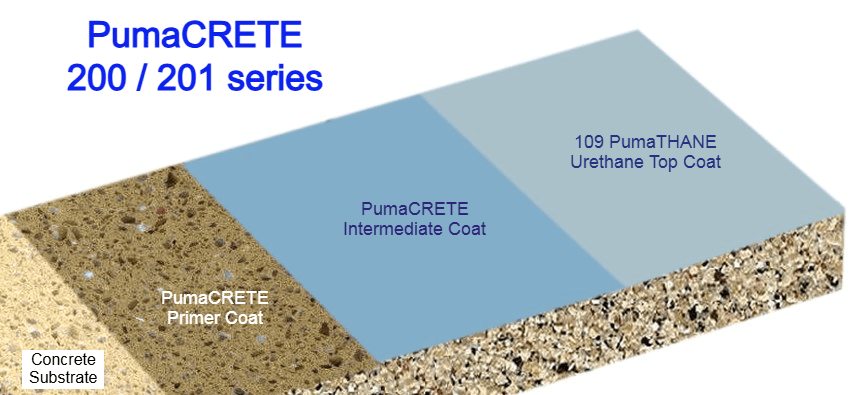
Heavy-Duty Conductive Mortar Systems 1/16 to 1/4 inch
Used in the most demanding environments.
FEATURES
- Restores damaged concrete
- Impact resistance
- High compressive strength
- Extended lifecycle performance
- Meets ESD S20.20, DoD4145.26m, NFPA99 requirements.
- Chemical resistant
Best for medium to heavy duty environments.
- Smooth finish (or light texture)
- High abrasion resistance for heavy traffic including forklifts, rubber and plastic wheels.
- Easy to clean
Countries Served · Países que Servimos
Food plant projects across 23 countries — grouped by sub-region.
PumaCRETE supplies material and on-site training to food and beverage processing plants across the entire Latin America & Caribbean region. Containers ship from the Port of Miami via regular vessel schedules. Project support is delivered in English, Spanish and Portuguese, with documentation packages tuned to each country’s customs and audit framework.
Sub-Region 01 · 8 Countries · 4–14 Day Transit
The Caribbean
Major sectors include rum and spirits distilling, seafood and lobster processing, sugar refining, dairy and ice cream, banana and citrus packing, coffee processing, and beverage bottling. See the dedicated Caribbean page →
Puerto Rico
San Juan · Ponce — USDA-jurisdiction. Pharmaceutical-grade food, dairy, coffee, beverage, bakery.Plantas alimentarias en Puerto Rico.
Dominican Republic
Haina · Caucedo · Puerto Plata — Meat & poultry, banana/pineapple, sugar, rum, dairy, beverage.Plantas alimentarias en República Dominicana.
Jamaica
Kingston · Montego Bay — Rum distilling, sugar, beverage, banana/citrus, poultry, bakery.Plantas procesadoras en Jamaica.
Trinidad & Tobago
Port of Spain · Point Lisas — Rum distilling, beverage, snack food, dairy, produce export.Plantas alimentarias en Trinidad.
Bahamas
Nassau · Freeport — Seafood and lobster, beverage, bakery, dairy, resort commissary kitchens.Plantas de procesamiento en Bahamas.
Barbados
Bridgetown — Rum distilling, sugar, dairy, bakery, beverage, seafood for resort supply.Plantas alimentarias en Barbados.
Haiti
Port-au-Prince · Cap-Haïtien — Rice milling, mango/avocado packing, beverage, coffee, dairy.Plantas alimentarias en Haití.
Cuba
Mariel · Havana (where licensing permits) — Rum distilling, sugar, cigar tobacco curing, seafood, dairy.Plantas alimentarias en Cuba.
Barbados
Bridgetown — Rum distilling, sugar, dairy, bakery, beverage, seafood for resort supply.Plantas alimentarias en Barbados.
Sub-Region 02 · 7 Countries · ~14 Day Transit
Central America
Major sectors include poultry and beef processing, shrimp aquaculture, coffee processing, sugar refining, banana and pineapple packing, palm oil refining, dairy, and beverage bottling. See the dedicated Central America page →
Guatemala
Santo Tomás de Castilla · Puerto Quetzal — Poultry, coffee, sugar, banana/pineapple, dairy.Plantas procesadoras en Guatemala.
Belize
Port of Belize City — Shrimp aquaculture, citrus juice, sugar, produce export packing.Plantas de procesamiento en Belice.
Honduras
Puerto Cortés — Shrimp farming, palm oil, coffee, dairy. Coastal humidity is severe.Plantas alimentarias en Honduras.
El Salvador
Puerto de Acajutla — Coffee, sugar, dairy, bakery, beverage bottling.Plantas alimentarias en El Salvador.
Nicaragua
Puerto Corinto — Beef and poultry, dairy, peanut and coffee processing, rum distillation.Plantas de procesamiento en Nicaragua.
Costa Rica
Puerto Limón · Puerto Caldera — Pineapple/banana, coffee, beverage, dairy, produce export.Plantas alimentarias en Costa Rica.
Sub-Region 03 · 8 Countries · 10–24 Day Transit
South America
Major sectors include beef, pork and poultry processing, seafood and salmon farming, coffee processing, wine and pisco production, dairy, sugar refining, soybean and grain processing, and beverage bottling. SENASA (Argentina) and MAPA (Brazil) audit-ready documentation included. See the dedicated South America page →
Venezuela
Puerto Cabello · La Guaira — Beverage, dairy, sugar, rum distilling, where logistics permits.Plantas alimentarias en Venezuela.
Ecuador
Guayaquil · Manta — Shrimp aquaculture, banana, cacao, tuna processing, dairy.Plantas alimentarias en Ecuador.
Chile
Valparaíso · San Antonio · San Vicente — Salmon farming, wine, fruit export, dairy, seafood.Plantas alimentarias en Chile.
Argentina
Buenos Aires · Rosario — Beef & pork, dairy, wine, soybean, beverage. SENASA-aligned.Plantas alimentarias en Argentina.
Uruguay
Montevideo · Nueva Palmira — Beef, dairy, wine, soybean, rice, beverage.Plantas alimentarias en Uruguay.
On-Site Certified Training — Delivered by Factory-Employed Trainers
Your crew is trained on your slab — by the people who make the material.
The single biggest reason urethane concrete floors fail isn’t the chemistry — it’s the installation. A 200°F-rated system installed by a crew that’s never mixed it is just a very expensive epoxy floor. That’s why PumaCRETE provides on-site certified installation training by factory-employed trainers as a standard part of every international project. Your in-house maintenance team or the local independent contractor you’ve hired learns the system directly from PumaCRETE technicians — on your jobsite, in your language, while your first floor is being placed.
La capacitación es entregada por técnicos empleados directamente por PumaCRETE — en su planta, en su idioma, durante el primer proyecto. Su equipo queda certificado para reparaciones futuras y nuevas instalaciones.
Treinamento ministrado por técnicos da fábrica — na sua planta, em português, durante o primeiro projeto. Sua equipe fica certificada para reparos e novas instalações.
What the Training Curriculum Covers
01
Surface Preparation
Diamond grinding or shot-blasting to CSP-4 minimum, HEPA dust extraction, ASTM F2170 moisture testing, crack chase and fill, drain dam-up. The step crews most commonly skip — we don’t.
02
Component Mixing
Two-component ratio verification, antimicrobial additive incorporation, pot-life management, temperature compensation for tropical heat or Andean altitude conditions.
03
Trowel Application
Gauge rake, spike roller, integral cove forming wet-in-wet at every wall and equipment plinth, slip-grade aggregate broadcast, topcoat sealing.
04
Mil Verification
Wet-film gauge readings during application, dry-film core-pull verification at QC sign-off, photographic record built for plant QA archive and audit defense.
05
Resistance Testing
ASTM C267 chemical-spot tests with sector-specific reagents — lactic acid for dairy, fatty acids for meat, ethanol for distilleries — plus wet-DCOF slip checks per ANSI A137.1.
06
Documentation & Handoff
Bilingual written installation manuals (EN/ES/PT), customer witness sign-off, repair and recoat protocols, plus phone and email support for the life of the floor.
PumaCRETE is a direct manufacturer. For Latin America and Caribbean projects, we sell material direct and we send factory technicians to train your team on-site. The 5-year written material warranty applies when documented procedures are followed and pre-installation moisture testing confirms the substrate meets specification.
6-Step Export Project Process
From inquiry to production-ready floor — typically 8 to 14 weeks.
Site Assessment
Plant owner shares facility drawings, sector type, audit framework and substrate condition. PumaCRETE responds with system recommendation, ballpark budget and documentation package within 5 business days.
Spec & Export Quote
Detailed system specification, square-foot pricing, container freight estimate (FOB Miami), and project schedule. Spec includes moisture test requirements, cove detailing, slope-to-drain treatment and color selection.
Material Production
Manufactured to order. Standard production lead time is 2 to 3 weeks from confirmed PO. Custom color blending adds 1 week. Antimicrobial topcoat is dosed at the factory before shipment.
Port of Miami Shipping
20-foot or 40-foot container via consolidated freight or dedicated booking. Ocean transit: 4–7 days to Puerto Rico (domestic U.S.), 7–14 days to most Caribbean ports, up to 24 days to southern South America.
Substrate Prep & Install
Customer crew (in-house maintenance or independent contractor) performs prep and application following the documented PumaCRETE specification. Factory trainer arrives for first install.
QC & Warranty Activation
Mil thickness, slip-coefficient and chemical-spot verification. Customer witness sign-off. 5-year written material warranty issued from PumaCRETE directly. Schoolar phone/email support continues for the life of the floor.
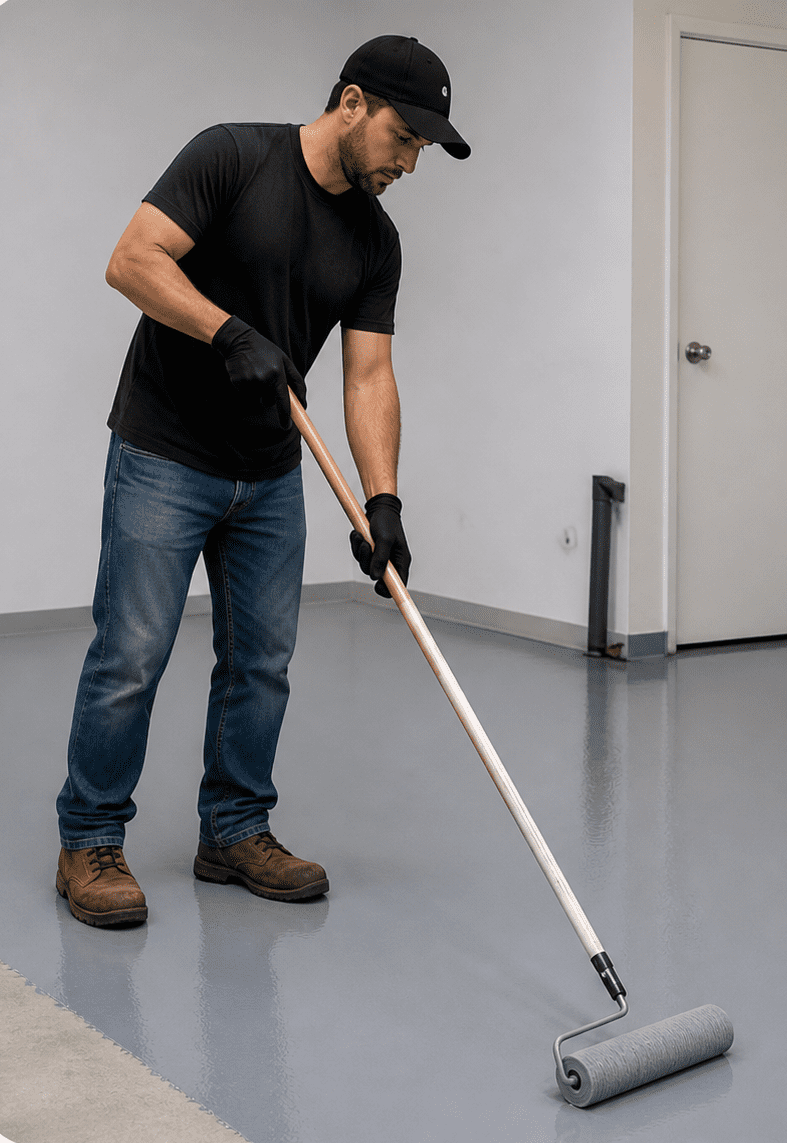
PumaCRETE® SITE TRAINERS
PumaCRETE® can provide on site trainers, along with detailed installation instructions and videos, specialty tools, and surface prep guidelines for new installers or DIY installation. See our installation page for our application resources.
Frequently Asked Questions
International food plant flooring FAQ
Yes. PumaCRETE ships from the Port of Miami to 23 countries across the Caribbean, Central America and South America in 20-foot and 40-foot ocean containers. Transit ranges from 4 to 7 days for Puerto Rico (domestic U.S.) up to 24 days for the southernmost South American ports.
PumaCRETE and Ucrete® are equal-class urethane cement systems. Both are trowel-applied polyurethane concrete; both meet USDA 9 CFR 416, FDA Food Code, HACCP, SQF, BRC and FSSC 22000 audit requirements; both carry equivalent thermal-shock windows (≈248–266°F wash-down) and equivalent chemical-resistance categories at equivalent thicknesses (1/4″–3/8″). The chemistry is parity. The difference is commercial: PumaCRETE is sold direct from the United States manufacturer to your plant — no distributor markup — with factory-employed trainers on your jobsite and EN/ES/PT project support for the life of the floor. Ucrete® is a registered trademark of Sika AG (formerly BASF Performance Flooring).
For Latin America and Caribbean projects, plant owners install PumaCRETE using their own in-house maintenance teams or independent contractors they source locally. PumaCRETE is a direct manufacturer — we sell materials and provide on-site training, but we do not install floors. Factory-employed trainers travel to your site to certify your crew on surface prep, mixing, application, mil verification and resistance testing.
Yes. PumaCRETE urethane concrete meets USDA 9 CFR Part 416 sanitation requirements and the FDA Food Code. The same documentation supports SQF, BRC, IFS, FSSC 22000 and HACCP audits, plus SENASA (Argentina), MAPA (Brazil), and regional inspection frameworks across Latin America.
Sí. PumaCRETE ofrece gestión de proyecto, fichas técnicas, capacitación en sitio y soporte de auditoría en español para plantas de procesamiento de alimentos en todo el Caribe, Centroamérica y Sudamérica hispanohablante. La misma química de hormigón uretano y la documentación USDA respaldan auditorías en cada jurisdicción.
Yes. Our certified installer network in Massachusetts and across New England is trained directly by PumaCRETE factory employees on surface prep, mixing, application, mil verification and ASTM resistance testing. No out-of-state subcontracting.
Sim. PumaCRETE oferece suporte de projeto em português para plantas de processamento de alimentos no Brasil. A mesma química de concreto uretano e a documentação USDA atendem aos requisitos do MAPA e dos esquemas de auditoria SQF, BRC e FSSC 22000.
PumaCRETE sends factory-employed trainers to your plant for the first installation. The training covers surface preparation, two-component mixing, trowel application, integral cove forming, mil verification and ASTM C267 resistance testing. Your crew is certified for ongoing repairs and future buildouts, with written manuals in English, Spanish and Portuguese.
A typical international project runs 8 to 14 weeks from confirmed PO to production-ready floor — 2 to 3 weeks production, 7 to 24 days ocean transit, plus customer site prep, installation and cure. Puerto Rico projects can compress to 6 weeks because of domestic shipping. Hurricane-season buffers are built into Caribbean schedules from June through November.
Audit Frameworks Supported
Documentation for every regional jurisdiction.
Every PumaCRETE international shipment includes the documentation your plant QA team needs to defend the floor specification through audits in any jurisdiction. Authoritative references: USDA 9 CFR Part 416(opens in new tab), FDA Food Code(opens in new tab), SQF Institute(opens in new tab), and FAO Food Safety(opens in new tab) guidance for Latin America and Caribbean regulators.
Direct From The Manufacturer · Trained On Your Site
Spec the floor that survives the climate, the chemistry and the audit.
PumaCRETE sells materials direct — no distributor markup — and provides on-site certified installation training by factory-employed trainers across 23 Latin America & Caribbean countries. Written specification and export budget delivered within 5 business days. Project support in English, Spanish and Portuguese.
Especificación escrita y presupuesto de exportación en 5 días hábiles. Soporte en español y portugués. Envío desde el Puerto de Miami a todos los puertos de América Latina y el Caribe.
