Beverage · Coffee
Coffee Roasting & Processing Floors, From Wet Mill to Cold Brew
Coffee plants combine dry and wet environments. Roasteries handle heavy green coffee bags, roaster heat, chaff and coffee oils. Cold brew and ready-to-drink lines run wet with acidic coffee and CIP. At origin, wet mills ferment and wash cherry all harvest long. PumaCRETE urethane concrete flooring covers every one of those areas with one seamless system.
248°F
Maximum service temperature
9,500 psi
Compressive strength
Seamless
Easy dust housekeeping
5-yr
Written warranty
GET A FREE QUOTE

What coffee processing does to a floor
Roaster heat
Roasters and afterburners radiate heat onto the floor around them, and hot beans hit the floor when cooling trays are emptied. The system is rated for service up to 248°F.
Coffee oils and chaff
Roasted coffee oils stain and soften coatings, and chaff and dust build up in joints and cracks. A seamless, sealed floor sweeps and washes clean.
Green coffee warehousing
Bags and supersacks of green coffee move by forklift and pallet jack. The 9,500 psi system resists wheel wear and impact.
Acidic coffee on wet lines
Cold brew, extract and RTD lines spill acidic coffee and get CIP cleaning daily. PumaCRETE resists both.
Wet mill fermentation
At origin, fermentation tanks and washing channels produce acidic wastewater all harvest. The system resists the acids and stays sound in constant wet.
Seasonal peak loads
Plants run flat-out during harvest. A floor that doesn’t need patching mid-season is worth the investment.
Recommended system by zone
One urethane concrete system, configured for the room you’re standing in. Thickness, texture and cove are set zone by zone. Add 1/8 in for integral cove.
| Zone | Recommended system | Key exposures |
|---|---|---|
| Green coffee receiving and warehouse | 401-HF, 1/4 in | Forklift traffic, bag and supersack loads |
| Roaster floor | 401-HF, 3/8 in (thermal) | Radiant heat, hot beans, chaff, oils |
| Grinding and packaging | 401-HF, 1/4 in | Dust, oils, cart traffic |
| Cold brew and extraction | 401-HF, 1/4 in + cove, slip-grade | Acidic coffee, CIP, constant wet |
| RTD filling | 401-HF, 1/4 in, slip-grade | Sugary and dairy-based spills, washdown |
| Wet mill (origin) | 401-HF, 3/8 in + cove | Fermentation acids, constant water, pulp |
Installing in a roastery
Around the roasters
Thicker thermal-grade topping is placed around roasters and cooling trays, where heat and hot beans hit the floor.
Phased with production
Roasting, packaging and warehouse are done in sections so production continues.
Origin projects
For wet mills and dry mills in Latin America, materials ship from Miami and a factory trainer certifies your local crew. See Caribbean & Latin America.
Food safety and audits
- Meets FDA current good manufacturing practice: floors that can be adequately cleaned and kept in good repair (21 CFR Part 117)
- Seamless floors make combustible-dust housekeeping easier, supporting your NFPA 61 program
- Aligned with SQF, BRC, IFS and FSSC 22000 audit expectations
- OSHA-compliant slip resistance (wet coefficient of friction 0.6–0.9)
Performance data
| Property | PumaCRETE 401-HF |
|---|---|
| Compressive strength | 9,500 psi (ASTM C579) |
| Tensile strength | 1,450 psi (ASTM C307) |
| Flexural strength | 3,200 psi (ASTM C580) |
| Bond to concrete | Exceeds substrate (ASTM D7234) |
| Abrasion resistance | 0.06 g loss (ASTM C501) |
| Impact resistance | >160 in-lb (ASTM D2794) |
| Service temperature | -40°F to 248°F |
| Thermal shock | Pass, boiling-to-ambient cycles |
| Wet coefficient of friction | 0.6–0.9 (tunable) |
| Vapor pressure tolerance | Up to 25 lbs through the slab |
| Minimum install temperature | 35°F (operating coolers) |
| Standard thickness | 1/4 in (3/8 in in thermal zones) |
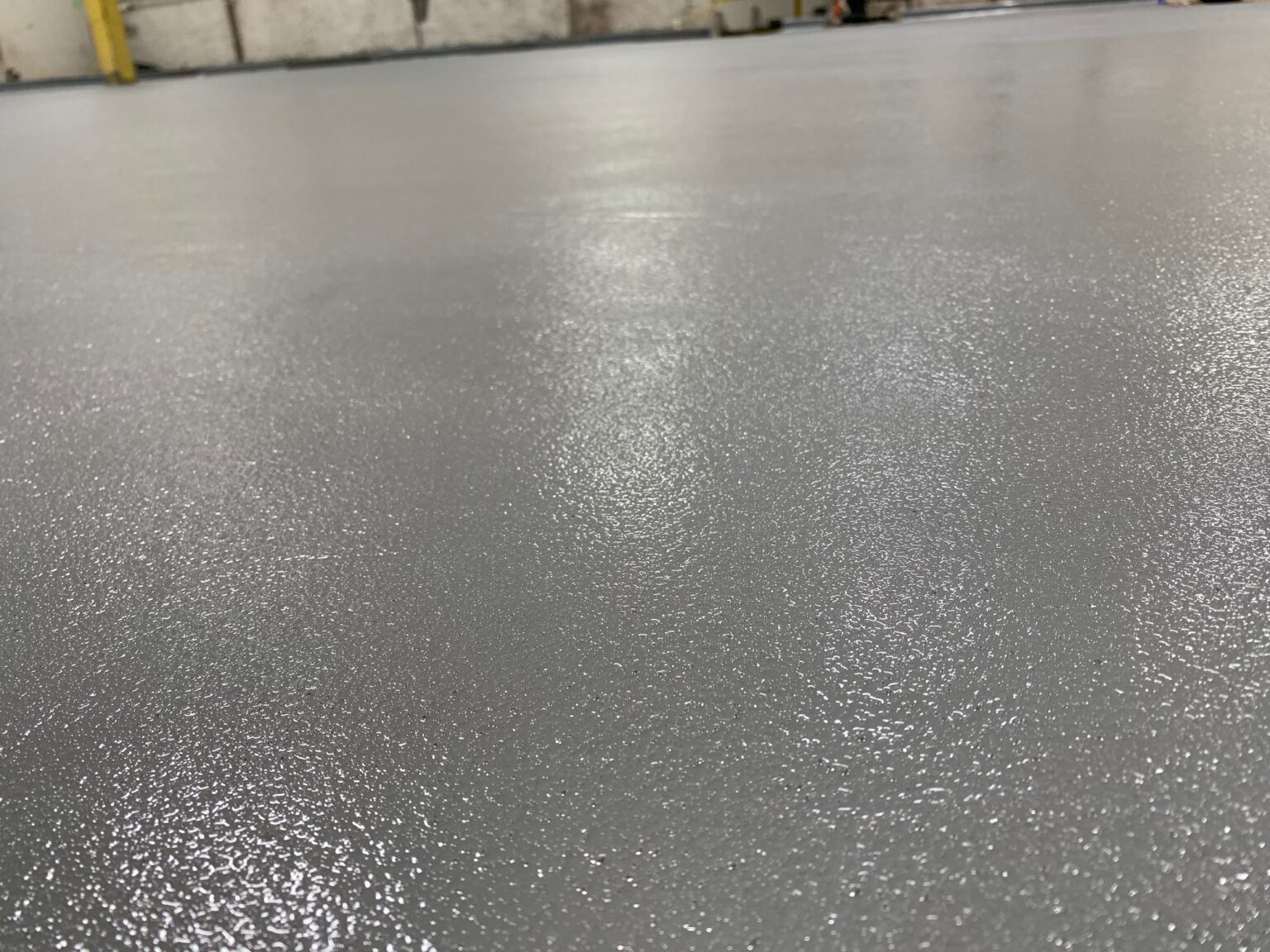
Standard 1/4-inch PumaCRETE 401-HF system. Full test data is on the technical data sheets.
Three ways to buy, direct from the manufacturer
Every system on this page is made by PumaCRETE and sold direct, with no distributor markup.
Buy the materials
Urethane concrete, primers, topcoats and cove kits shipped direct from the manufacturer to your plant. No distributor markup.
Buy it installed
Turnkey installation by factory-trained crews, with material and workmanship warranties from a single source.
Train your own crew
A factory-employed PumaCRETE trainer certifies your maintenance team or local contractor on your slab: prep, mixing, troweling, cove and testing.
Frequently Asked Questions
Coffee Roasting & Processing Floors FAQ's
Around roasters, yes: heat, hot beans and oils damage thin coatings. In dry warehouse areas we may recommend a thinner system. If you also run cold brew or RTD lines, those wet areas need the full system.
PumaCRETE resists oils and cleans with standard degreasers. Darker floor colors also help hide normal staining.
Yes. A seamless floor without joints or cracks makes it easier to remove coffee dust and chaff, which supports a combustible-dust housekeeping program.
Yes. PumaCRETE ships to wet mills and dry mills throughout Central and South America, with on-site training for local crews.
More Related food & beverage floors
EXPERIENCE AND EXPERTISE
Ready to spec your coffee plant floors?
Get a no-obligation site assessment. We review your rooms, chemistry, temperatures and production calendar, then deliver a written specification and budget within five business days.
