Smart Warehouses · Fulfillment · Manufacturing
AGV & AMR Flooring
PumaCRETE® high-performance composite and urethane mortar flooring engineered for Automated Guided Vehicles (AGVs) and Autonomous Mobile Robots (AMRs). Flat, matte, abrasion-resistant for polyurethane wheel traffic. Coefficient of friction above 0.6. Compatible with laser, magnetic, and LiDAR navigation. Available in static dissipative or conductive versions per DIN EN 61340-5-1.
GET A FREE QUOTE


The PumaCRETE Buying Experience
Three Ways to Buy. One Robot-Rated System.
PumaCRETE customizes the buying experience to match how your warehouse or manufacturing automation project is structured. Choose complete turnkey installation through our nationwide network of certified applicators, purchase materials only if you have your own crew or contractor (with detailed installation instructions, videos, specialty tools, and surface prep guidelines included), or schedule expert on-site factory training to qualify your own installers. One manufacturer, three ways to buy.
AGV vs AMR — Same Floor Requirements, Different Reasons
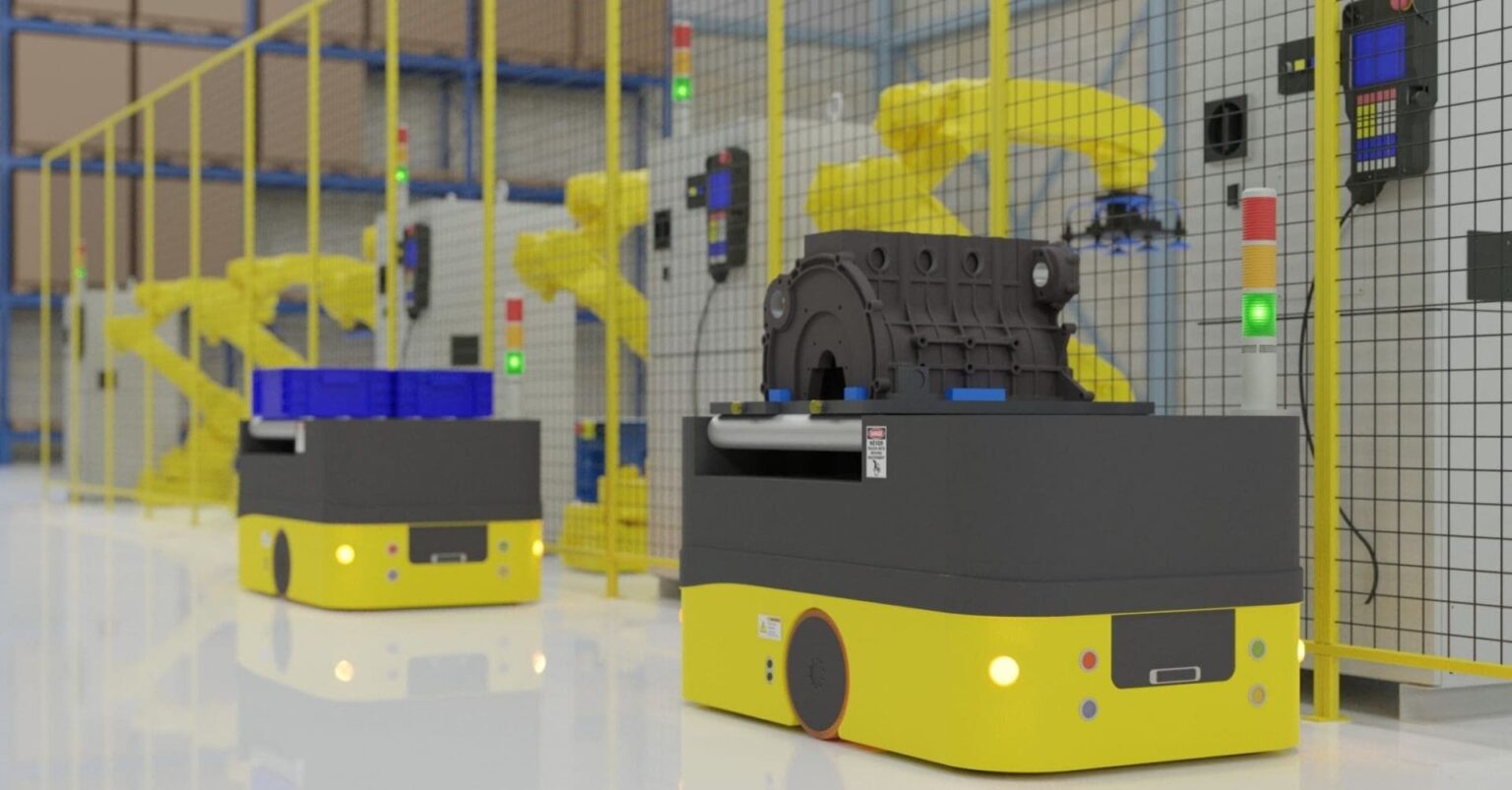
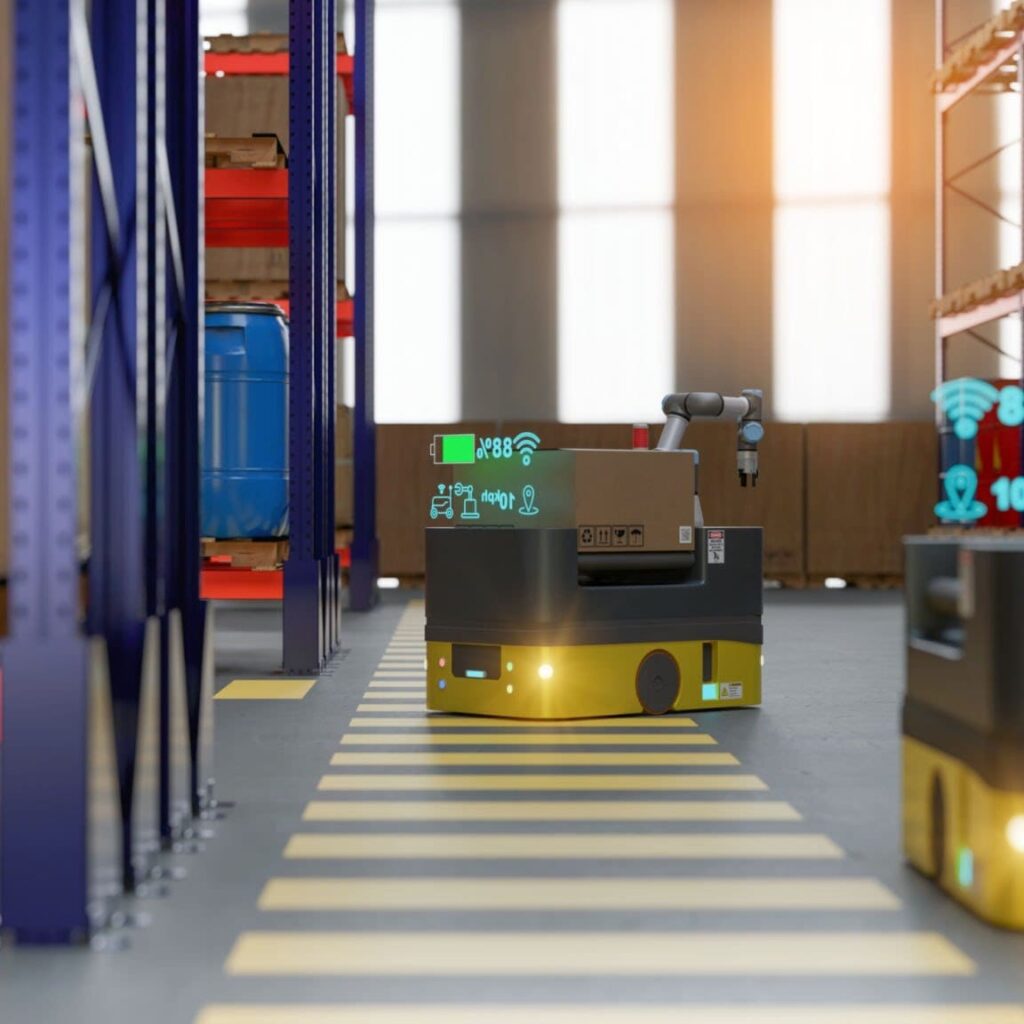
The warehouse automation market is on track to exceed $13 billion by 2026 as fulfillment, manufacturing, and logistics operators deploy AGV and AMR fleets to handle material movement. Both technologies depend on the floor — but in different ways. AGVs are track-bound, following fixed paths defined by magnetic tape, embedded wires, RFID chips, or laser reflectors. They concentrate wheel wear on the same lines repeatedly. AMRs navigate dynamically using LiDAR, SLAM, and onboard cameras — they distribute traffic more evenly but require consistent surface optical properties for their sensors. Both fleets need flat, matte, abrasion-resistant, slip-resistant flooring — and PumaCRETE engineers a single system that serves both.
Where AGV/AMR flooring differs from generic warehouse epoxy: small polyurethane wheels carrying concentrated loads put extreme stress on substrate condition, joint integrity, and surface durability. A floor that performs fine for foot traffic and forklift wheels can fail beneith AGV traffic in months. PumaCRETE flooring is engineered specifically for the polyurethane wheel duty cycle — ultra-high abrasion resistance, level smooth surface, flexible joint filler that prevents spalling under repeated small-wheel passes, and coefficient of friction above 0.6 for safe traction without slipping.
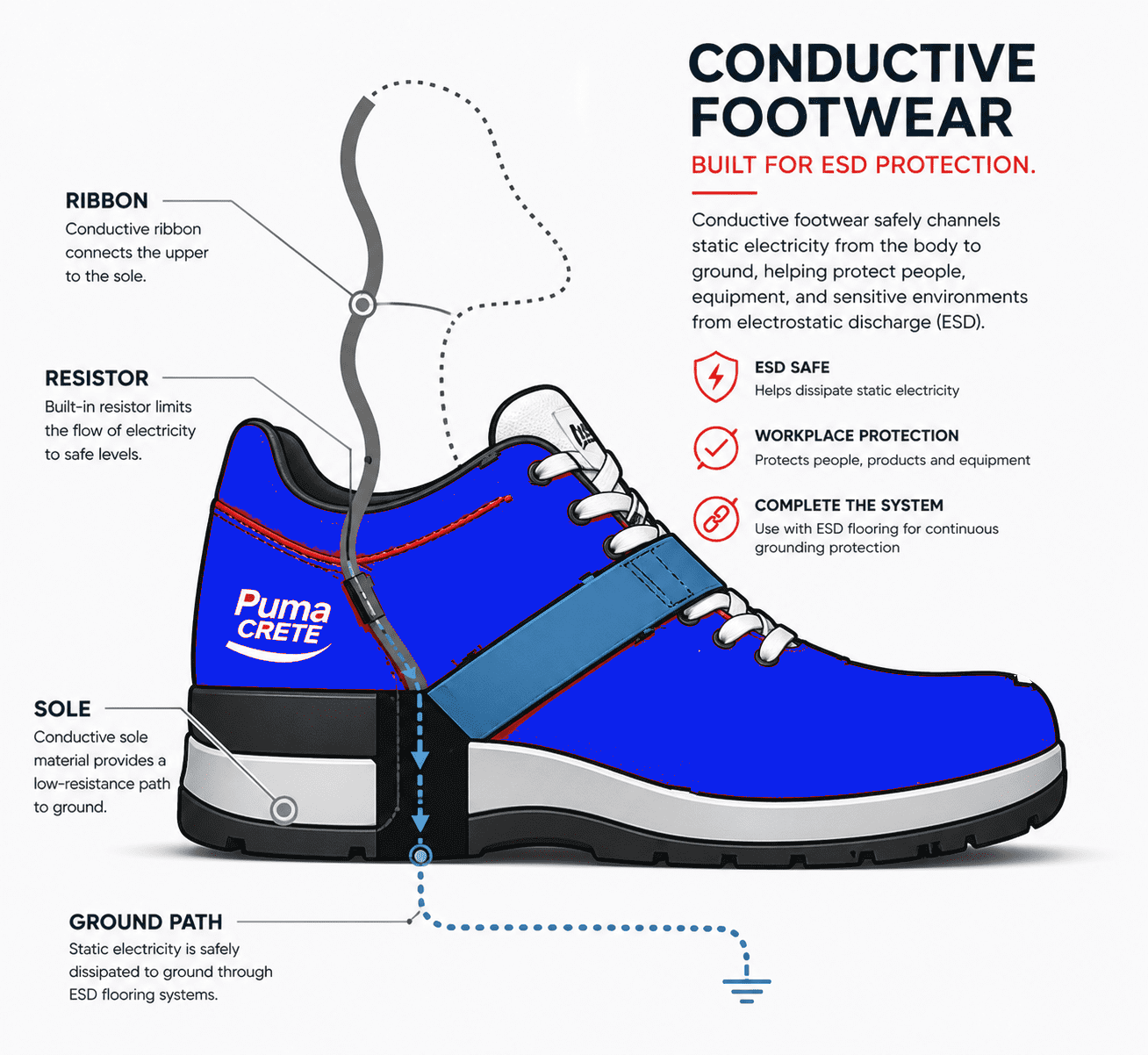
PumaCRETE AGV/AMR systems are also available in ESD-rated dissipative and conductive versions — important for fleets operating in electronics manufacturing, semiconductor fabs, biotech, pharma, and cleanrooms where the floor serves double duty. Reference IEC(opens in new tab) standard DIN EN 61340-5-1 for the international ESD floor standard most often cited in AGV/AMR specifications.
Industry sectors for ESD flooring:
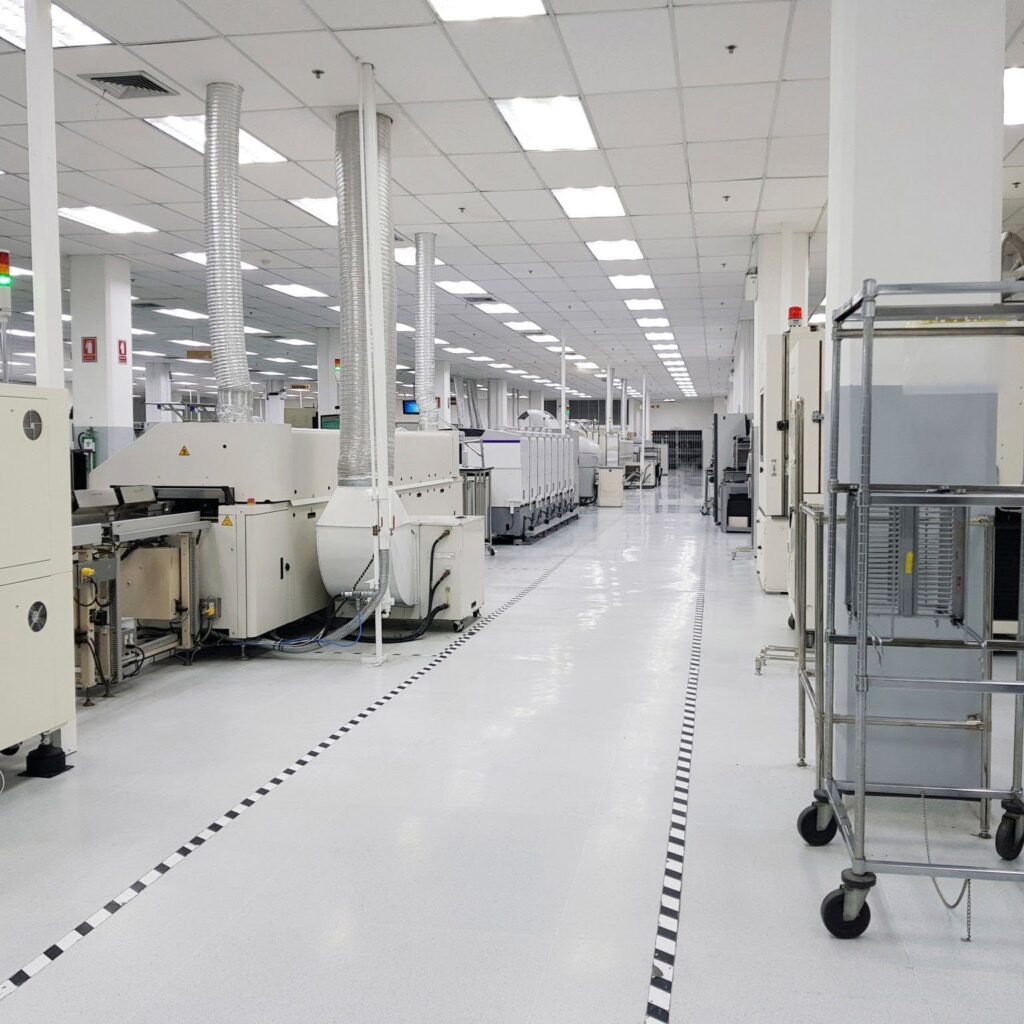
ELECTRONICS MANUFACTURING
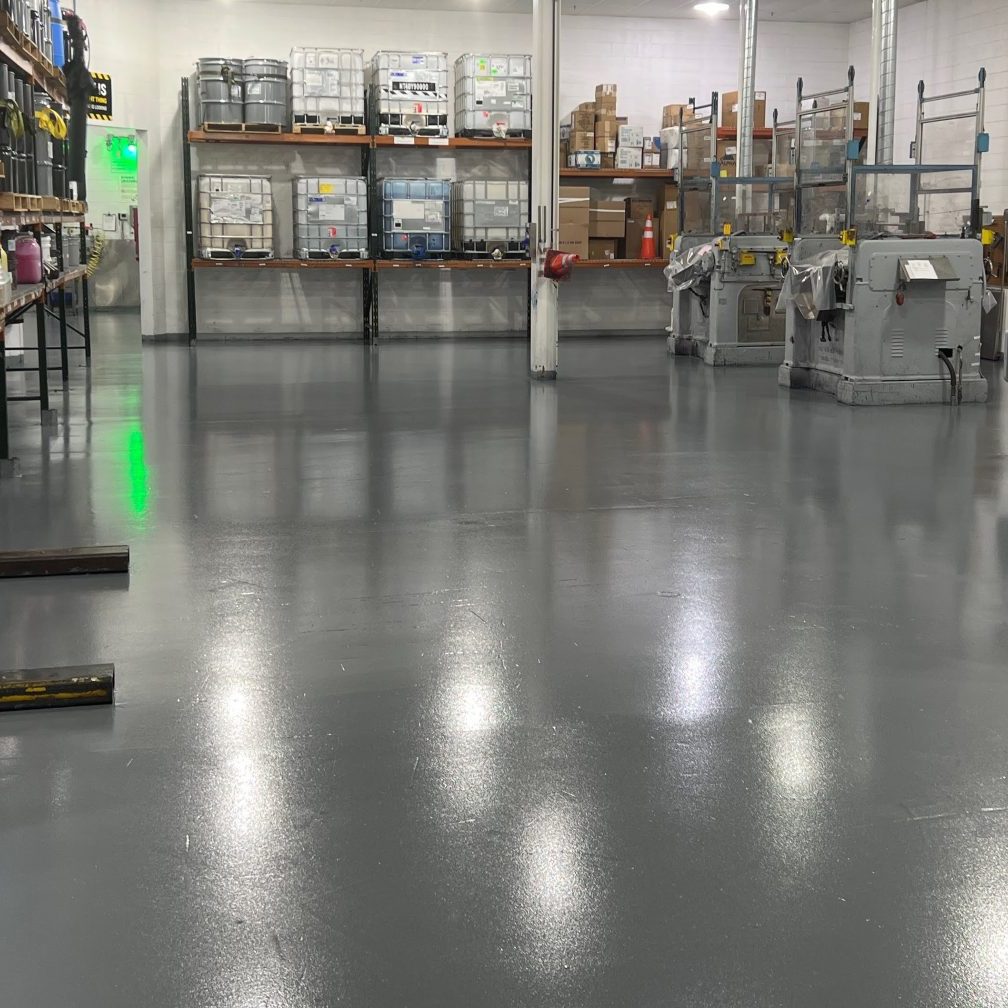
AMMUNITION / EXPLOSIVES

DATA NETWORK CENTERS
Four Common Floor Problems
Why AGV and AMR Fleets Stop Working
Most AGV and AMR performance failures trace back to four classic floor problems. PumaCRETE 201-AGV and 301-AGV systems are engineered to fix all four.
TOO BUMPY
Cracks, joints, holes, spalled and rough concrete cause wear on small polyurethane wheels and accelerate maintenance costs.
PumaCRETE fixes
Joints filled with flexible high-performance filler. Cracks repaired. High points ground flat, dips raised. Smooth wheel tolerance restored.
TOO SLICK
Insufficient coefficient of friction means AGVs and AMRs cannot maintain traction at designated speeds.
PumaCRETE fixes
301-AGV PumaESD non-slip surface with COF greater than 0.6 — above ANSI A1264.2 industrial standard.
TOO SHINY
High gloss reflects light and confuses laser-guided navigation. AMR LiDAR can misread reflected light as obstacles.
PumaCRETE fixes
Matte finish standard — saves cost vs glossy alternatives that must be refinished after fleet deployment.
TOO SOFT
VCT, rubber, and sheet goods deform under concentrated AGV wheel loads. Soft floors fail under repeated traffic.
PumaCRETE fixes
Hard, abrasion-resistant composite system. Resists gouging, scuffing, and indentation under polyurethane AGV/AMR wheels.
PumaCRETE AGV / AMR Product Lineup
201-AGV PumaESD
Hi-build composite system. 43 mils. For new construction and renovation of like-new concrete substrate. Available in dissipative or conductive resistance range.
- Thickness
- 43 mils
- Best For
- Like-new concrete,
- lighter wheel loads
- ESD Available
- Dissipative or Conductive
301-AGV PumaESD
Urethane mortar composite resurfacer. 1/8 to 1/4 inch. Restores badly damaged concrete to smooth condition. Vapor mitigation barrier for high-moisture substrate. Polymeric lock coat for cleanability.
- Thickness
- 1/8″ to 1/4″
- Best For
- Damaged concrete, heavy traffic, power lifts
- ESD Available
- Dissipative or Conductive
Industries Deploying AGV / AMR Fleets
E-Commerce Fulfillment
Goods-to-person picking, shelf-to-station automation, tote movement. Amazon-style fulfillment centers.
Manufacturing Kitting
Part delivery to assembly cells, WIP transport between stations, automated kit staging.
Distribution Centers
3PL operations, cross-docking, pallet movement, sortation. I-90, I-87, I-95 corridor logistics.
Cold Storage
Freezer and chilled-storage AMR. PumaCRETE service temperature from -50°F to +250°F handles freezer use.
Electronics Manufacturing
Smart factories with AGV material delivery to SMT lines. ESD-rated AGV flooring required (dissipative or conductive).
Pharma & Biotech
Cleanroom AMR for sterile manufacturing, vaccine production, lab automation. ISO Class compatible.
Healthcare Logistics
Hospital AMR for linen, pharmacy, lab specimen transport. Anti-microbial options for surgical-corridor use.
Food & Beverage
Automated case-pick, palletizing AGV, ingredient delivery in food plants. USDA/FSMA compatible options.
Automotive & Aerospace
Engine assembly delivery, fuselage parts transport, automotive Tier 1 lines. Heavy-load AGV duty.
Technical Specifications
Standards-Backed AGV / AMR Performance
PumaCRETE AGV/AMR systems meet the universal floor surface specifications that leading AGV and AMR manufacturers publish. ESD-rated versions per DIN EN 61340-5-1 (see IEC
| Specification | 201-AGV PumaESD | 301-AGV PumaESD |
|---|---|---|
| Thickness | 43 mils (hi-build) | 1/8″ to 1/4″ (urethane resurfacer) |
| Substrate requirement | Like-new concrete | Restores damaged concrete |
| Dissipative resistance range | 10&sup5; to 10&sup9; ohms | 10&sup5; to 10&sup9; ohms |
| Conductive resistance range | 25,000 to 1.0×10&sup6; ohms | 25,000 to 1.0×10&sup6; ohms |
| Coefficient of friction | Greater than 0.6 | Greater than 0.6 |
| Vapor mitigation | No | Yes — built-in barrier |
| Finish | Matte (laser-compatible) | Matte (laser-compatible) |
| Service temperature | -20°F to +200°F | -50°F to +250°F (freezer-rated) |
| ESD standard | DIN EN 61340-5-1 | DIN EN 61340-5-1 |
AGV vs AMR — Same Floor, Different Stresses
| Characteristic | AGV (Automated Guided Vehicle) | AMR (Autonomous Mobile Robot) |
|---|---|---|
| Navigation method | Magnetic tape, embedded wire, RFID, laser reflectors | LiDAR, SLAM, cameras, AI mapping |
| Path | Fixed, predefined | Dynamic, obstacle-avoiding |
| Wear pattern | Concentrated on same path = extreme abrasion | Distributed across floor area |
| Primary floor risk | Track wear, joint spalling | Optical confusion (shine/reflection) |
| PumaCRETE solution | 301-AGV high-abrasion composite + flexible joint filler | Matte finish + consistent surface optical properties |
PumaCRETE vs Other AGV / AMR Floor Manufacturers
The AGV/AMR flooring market includes engineered panels (ResinDek), interlocking tile (Ecotile), and resinous flooring (PumaCRETE and others). Each has tradeoffs.
| Capability | PumaCRETE AGV | Engineered Panels (e.g. ResinDek) | Interlocking Tile (e.g. Ecotile) |
|---|---|---|---|
| Installation surface | Slab-on-grade or existing concrete | Elevated mezzanines / work platforms | Any flat substrate |
| Seams / joints | Seamless monolithic + flexible filler | Panel edges = potential wheel-jolt | Many joints = wear and deterioration |
| Restores damaged concrete | Yes — 301-AGV 1/8″ resurfacer | Bridges, doesn’t fix | Bridges, doesn’t fix |
| ESD-rated | Yes — dissipative or conductive | Limited ESD versions | Some ESD options |
| Vapor mitigation | Yes — 301-AGV built-in | Not applicable (elevated) | No |
| Buying options | Turnkey · materials · training | Product purchase + installer | DIY-friendly product |
Comparison based on publicly published competitor data. PumaCRETE is not affiliated with ResinDek (Cornerstone Specialty Wood Products), DC Flooring, Ecotile, Stonhard, Sika, or Dur-A-Flex. Trademarks belong to their respective owners.
Dissipative vs. Conductive — Which Do You Need?
| Property | Static Dissipative (SD) | Conductive (C) |
|---|---|---|
| Resistance to ground | 1×10&sup6; – 1×10&sup9; ohms | 25,000 – 1,000,000 ohms |
| Industries served | Electronics, data centers, biotech, semiconductors | Munitions, AA&E, fuel handling, flammable solvents |
| Governing standard | ANSI/ESD S20.20; EN 61340-5-1 | DoD 4145.26-m; NFPA 99 |
| Primary use case | Protect ESDS components | Prevent ignition |
Installation & Certification
Installed by Factory-Trained Certified Applicators
Every PumaCRETE turnkey AGV/AMR installation is delivered by factory-trained, factory-certified applicators working from our nationwide installer network. In the New England region, our certified installer partner EP Floors Corp. (Three Rivers, MA) handles many of the AGV and AMR installations — they can turn around an area quickly in many instances. We do not sub-contract to unknown crews. Every installer has been trained at PumaCRETE on substrate diagnosis, surface leveling, flexible joint filling, COF verification, ESD resistance testing, and post-install acceptance against AGV/AMR manufacturer specifications — and every installation is backed by a manufacturer-plus-installer warranty.
Six-Step Turnkey Process for AGV / AMR Facilities
1. Substrate Assessment
On-site evaluation. Concrete condition mapped — cracks, joints, spalls, voids, gloss, surface flatness. AGV/AMR fleet wheel size, load, and navigation type documented. ESD requirement confirmed. Written spec delivered.
2. Surface Prep & Repair
Diamond grinding or shotblasting. High points ground flat, dips raised. Cracks repaired. Spalled joint edges repaired. Damaged concrete sections rebuilt with rapid-cure repair mortar.
3. Joint Treatment
Expansion joints filled with flexible high-performance joint filler to prevent edge spalling under repeated polyurethane wheel passes. This step is what differentiates AGV-rated installation from general industrial epoxy.
4. PumaESD Application
201-AGV PumaESD for like-new concrete (43 mils) or 301-AGV urethane mortar (1/8 to 1/4 inch) for damaged substrate. Optional ESD primer + conductive ground grid if dissipative or conductive version specified.
5. Cure & Test
Per manufacturer cure schedule. Post-install COF testing verifies friction above 0.6. Gloss measurement confirms matte finish. ESD resistance testing per DIN EN 61340-5-1 if ESD-rated version installed.
6. Fleet Acceptance & Warranty
Written acceptance documentation against AGV/AMR manufacturer floor specs. Manufacturer + installer warranty. Maintenance protocol delivered for sanitation staff.
Self-Install? PumaCRETE Makes It Easy
If you have your own crew or contractor, PumaCRETE provides low-cost on-site trainers, assistance with surface preparation, specialty supplies and tools, installation videos, and detailed instructions for trouble-free DIY installation. Materials ship directly to your facility. Or schedule on-site factory training to qualify your in-house team for current and future projects.
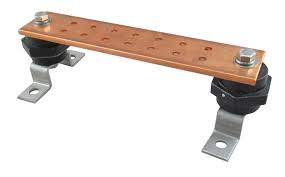
EARTH GROUND (copper ground rod, bar, outlet.
Copper ground rods are often used in Military, Munitions, and manufacturing environments. At the ground point on rod... remove oxidation from rod (for connection with a clamp). Run copper foil tape on the floor, per figure 2. Run the tape up the ground rod, and secure tape to ground rod using the copper foil tape.
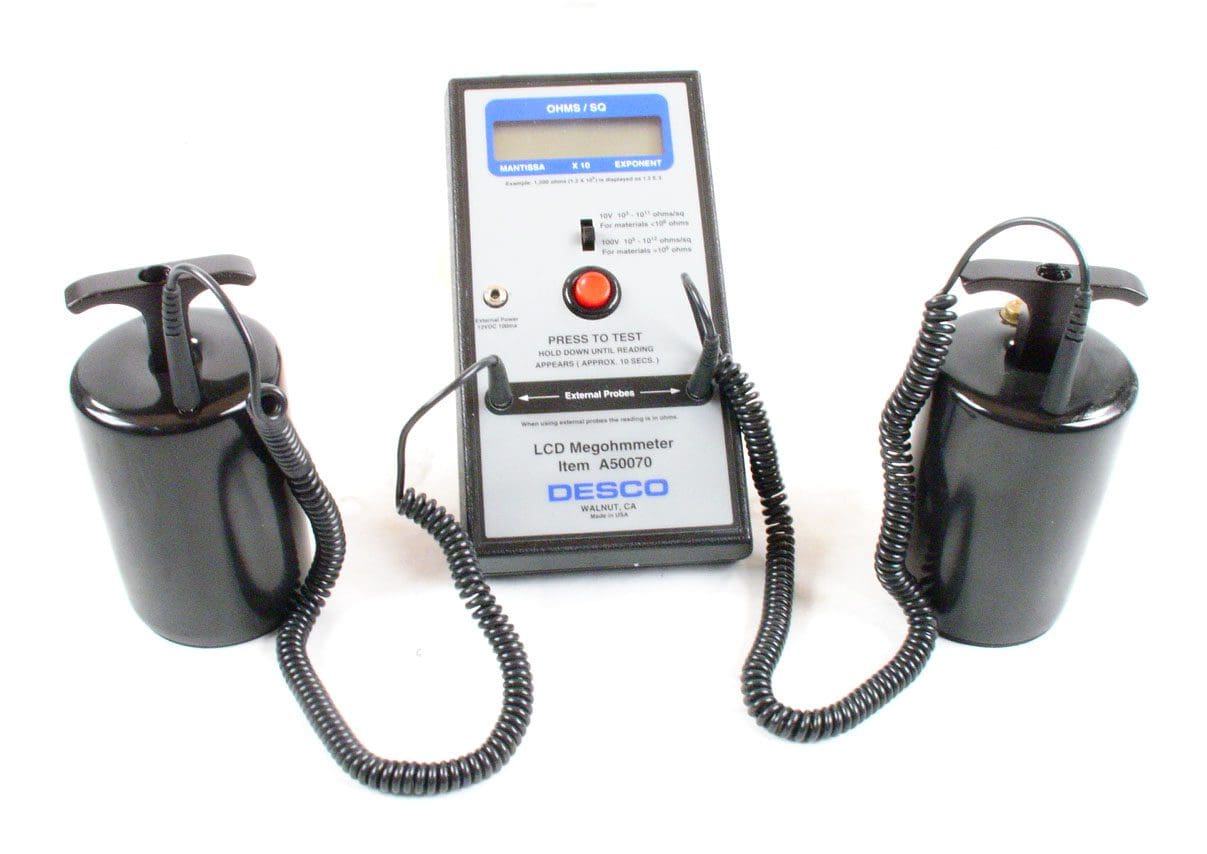
Certify the Flooring meets:
DoD 4145.26M(opens in new tab) ESD Association S20.20(opens in new tab) NFPA(opens in new tab) OSHA(opens in new tab)
Certify the Flooring meets:
DoD 4145.26M(opens in new tab) ESD Association S20.20(opens in new tab) NFPA(opens in new tab) OSHA
NATIONWIDE NETWORK OF INSTALLATION
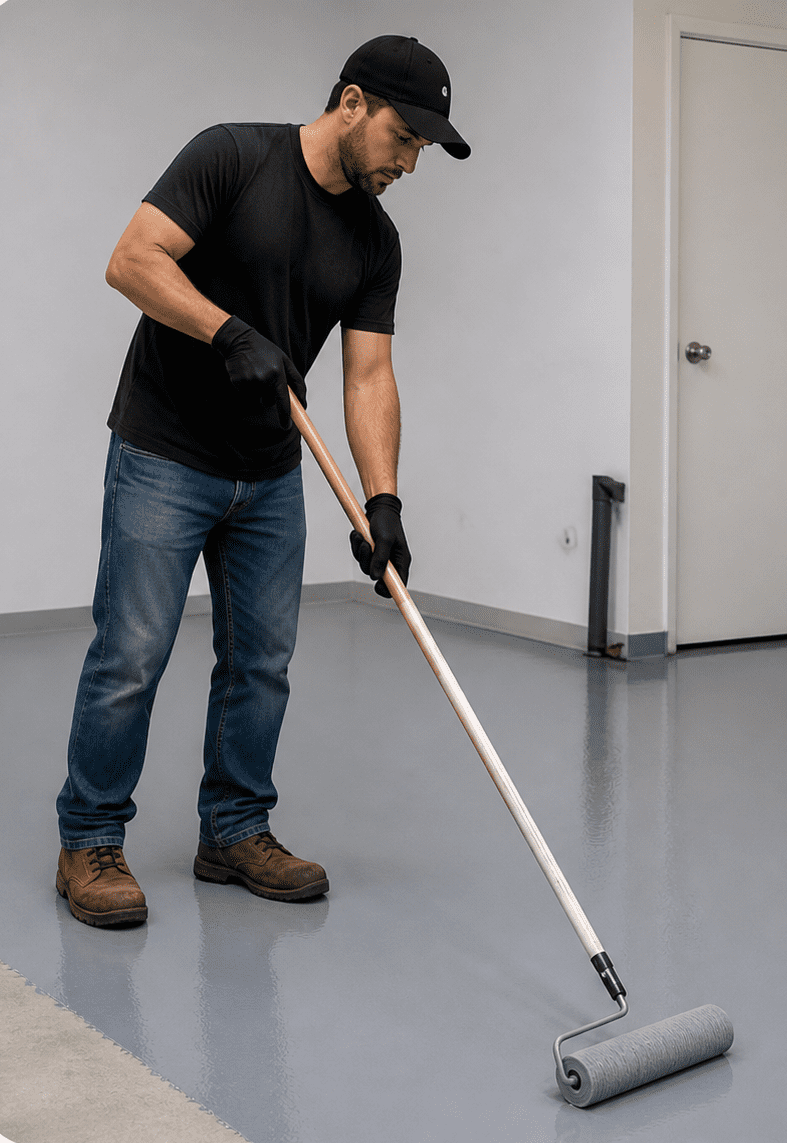
With a nationwide network of installers, PumaCRETE® has provides a tradition of quality. Our factory-trained installation crews can provide turn-key installation and localized service. In many cases, we can train your personnel or local contractor, with on site training available.
PumaCRETE® SITE TRAINERS
PumaCRETE® can provide on site trainers, along with detailed installation instructions and videos, specialty tools, and surface prep guidelines for new installers or DIY installation. See our installation page for our application resources.
Frequently Asked Questions
AGV / AMR Flooring FAQ
AGVs (Automated Guided Vehicles) follow fixed paths defined by magnetic tape, wires, RFID, or laser reflectors. They concentrate wear on the same paths repeatedly, requiring extreme abrasion resistance on those tracks. AMRs (Autonomous Mobile Robots) navigate dynamically using LiDAR, SLAM, and cameras. They distribute wear more evenly but are more sensitive to floor consistency, gloss, and surface uniformity because their navigation depends on consistent sensor feedback. Both technologies require flat, smooth, matte, abrasion-resistant surfaces — but for slightly different reasons.
Four classic problems disrupt robot performance: TOO BUMPY (cracks, joints, holes, spalls, rough concrete causes wear on small polyurethane wheels and adds maintenance cost), TOO SLICK (insufficient coefficient of friction means vehicles cannot maintain traction at designated speeds), TOO SHINY (high gloss reflects light and confuses laser navigation), and TOO SOFT (VCT, rubber, and sheet goods deform under concentrated wheel loads and fail). PumaCRETE 301-AGV and 201-AGV systems address all four.
PumaESD 301-AGV resurfacer provides a non-slip surface with coefficient of friction greater than 0.6 — above the ANSI A1264.2 industrial standard. This ensures AGV and AMR drive wheels maintain traction without slipping while running at designated speeds, and that workers in the same area have safe slip resistance.
Yes. PumaCRETE AGV and AMR systems are available in both static dissipative (10&sup5; to 10&sup9; ohms) and conductive (25,000 to 1.0×10&sup6; ohms) resistance ranges per DIN EN 61340-5-1. This is important for AGV/AMR fleets operating in electronics manufacturing, semiconductor fabs, biotech, pharma, and cleanroom environments where the floor must serve dual duty as both a robot-rated surface AND an ESD-rated surface.
Yes. PumaESD 301-AGV is a urethane mortar resurfacer applied at 1/8 to 1/4 inch thickness, specifically engineered to restore badly damaged concrete to a smooth, level, robot-ready surface. It also acts as a vapor mitigation barrier for concrete with high moisture transmission. Cracks, joints, holes, and spalls are repaired during surface prep, and high-performance flexible joint filler prevents wheel jolting at expansion joints.
Yes. PumaCRETE offers three buying options: complete turnkey installation through our nationwide certified installer partner network (including EP Floors Corp. as our New England partner), materials-only supply with detailed installation instructions, videos, specialty tools, and surface prep guidelines, or on-site factory training to qualify your own installers. The materials-only and training options work well for warehouse operators who already have flooring contractors on retainer.
PumaCRETE AGV/AMR flooring is designed to meet the universal surface specifications that AGV and AMR manufacturers publish for their fleets — flat, matte, slip-resistant, abrasion-resistant, ESD-optional. It works with leading AGV manufacturers (Daifuku, Dematic, JBT, Hyster-Yale, Toyota) and AMR manufacturers (Locus Robotics, 6 River Systems, Geek+, Fetch Robotics, MiR, OTTO Motors, KUKA). Specific brand requirements are confirmed during the site assessment phase.
Related PumaCRETE Systems
Explore More Industrial Flooring
External Authority References
International Electrotechnical Commission (IEC)(opens in new tab) — governs DIN EN 61340-5-1 ESD floor standard
EOS/ESD Association(opens in new tab) — ANSI/ESD S20.20 + STM7/97 test methods
Material Handling Industry of America (MHI)(opens in new tab) — AGV/AMR industry body and ProMat reference
Construction Specifier(opens in new tab) — flooring spec resource for AGV/AMR areas
EXPERIENCE AND EXPERTISE
THE PumaCRETE Difference
We have over 30 years of experience behind us. Customers can rest assure that the system we recommend shall be the most cost effective. We provide customized solutions for challenging issues.
